
Key Economic Insights: The economy of Namibia generates an estimated GDP of $13.37 billion ($4,413 per capita) supporting a population of 3,022,401. Productive output is anchored by 67% services, 26.3% industry and manufacturing, and 6.7% agriculture and natural resource extraction. Key merchandise exports include diamonds, gold, fish, radioactive chemicals, and ships, directed primarily toward Global and regional trade partners.
Namibia, with a population of 3,022,401 (as of the 2023 Population and Housing Census), is one of the most sparsely populated countries in the world. Located in southern Africa, Namibia covers 824,290 square kilometers, ranking 32nd in total area, just behind Venezuela, RB.
As of 2024, Namibia’s economy is characterized by a GDP of approximately $13.37 billion. The GDP per capita in Namibia is approximately $4,413 (as of 2024).
Namibia is classified by the World Bank as an upper-middle-income economy, with growth opportunities across its mining, fishing, tourism, and services sectors.
Namibia Economic Structure & Sector Analysis
| Economic Dimension | Official Indicator (2024–2026) | Authoritative Source |
|---|---|---|
| GDP & Macro Output | Nominal GDP: $13.37 billion | Per Capita: $4,413 | World Bank WDI / IMF |
| Sector Breakdown | Services: 67% | Industry: 26.3% | Agriculture: 6.7% | World Bank National Accounts |
| Trade & Commodities | Top Exports: diamonds, gold, fish, radioactive chemicals, and ships (Total: $13.8 billion) | UN Comtrade / OEC |
| Demographics & Labor | Population: 3,022,401 | Distributed workforce across formal & primary sectors | ILO / UN Population Division |
| Strategic Trade Corridors | Leading Trade Partners: Global and regional trade partners | World Bank WITS / IMF DOTS |
- Primary activities: 6.7% of GDP.
- Secondary activities: 26.3% of GDP.
- Tertiary activities: 67% of GDP.
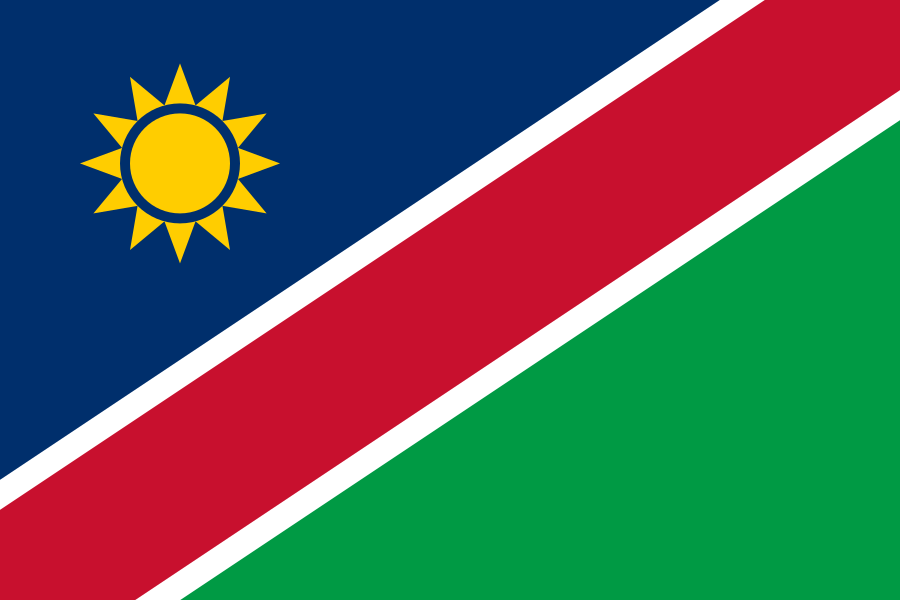
Primary Sector of Namibia
With 47.14% of the land dedicated to agriculture, the country produces a variety of products including root vegetables, milk, maize, millet, grapes, beef, onions, wheat, fruits, and pulses.
Despite contributing only 6.7% to the GDP, agriculture plays a crucial role in providing livelihoods and food security. The top ten agricultural products, based on tonnage, highlight the importance of crops and animal products in sustaining Namibia’s agricultural sector.
The country’s diverse geology provides a rich array of natural resources, including diamonds, copper, uranium, gold, silver, and more. These resources drive the economy through mining, fishing, and hydropower generation, with potential for oil, coal, and iron ore extraction.
Secondary Sector of Namibia
In Namibia, industrial products like construction materials are prominent. The country’s secondary sector plays a crucial role in producing goods for domestic consumption and export, contributing to its economic growth and development.
Manufactures in Namibia’s total exports only accounted for 32.61% in 2023, indicating their relatively minor importance compared to other sectors.
Tertiary sector of Namibia
The tertiary sector, also known as the service sector, encompasses the ‘soft’ parts of the economy where individuals provide knowledge and time to enhance productivity and meet needs. It involves intangible goods such as attention, advice, and expertise, catering to both consumer and business-to-business services. In Namibia, key tertiary activities include healthcare and medical care, education and training, banking and finance, communication and information exchange, tourism and hospitality, and transportation and logistics.
Highlighting these, Namibia’s economy highly relies on tourism, contributing significantly to its GDP. With 1,651,000 annual arrivals and a tourist-population ratio of 0.6432, the industry thrives. Etosha National Park and the Namib Desert are among the most popular destinations, attracting visitors with their unique wildlife and breathtaking landscapes.
Another example of tertiary economic activity is the mobile cellular sector, with approximately 2.9 million subscriptions, supporting technological growth by enhancing communication, fostering innovation, and enabling digital services.
Military Activities and Economic Sectors of Namibia
In Namibia, the primary sector supports the military by providing resources for equipment. The secondary sector manufactures military tools and weapons. The tertiary sector includes services like training and logistics. The quaternary sector focuses on research and development for better technology, while the quinary sector involves high-level decision-making and strategy for national defense.
In 2023, Namibia’s military expenditure is 338.2 million US dollars, which is 3.00% of the country’s GDP. The active military force consists of 9,900 personnel, resulting in 6.3 active military members per 1,000 capita.
Biggest company in Namibia
Which is the biggest company in Namibia? As of 2025, it is FirstRand Namibia (the parent of FNB Namibia), the largest company listed on the Namibian Stock Exchange with a market capitalisation of around N$13.8 billion (approximately US$777 million). FirstRand Namibia operates in the banking and financial services industry, which is part of the tertiary economic sector.
International Trade of Namibia
Import Activities of Namibia

Namibia’s high import activities, accounting for 55% of GDP, are crucial for meeting domestic demand and supporting economic growth.
Namibia’s key import activities include refined petroleum, ships, copper ore, trucks, and electricity. Its main import partners are South Africa, China, Nigeria, India, and the UAE.
Exports Activities of Namibia

Namibia’s export activities in 2023 totaled $5.49 billion, constituting 36.74% of its GDP. This high percentage underscores the significant role exports play in driving the country’s economy and highlights the importance of maintaining and expanding these activities.
Namibia’s export activities are diversified, with key partners including South Africa, Botswana, China, Zambia, and France. The country primarily exports diamonds, gold, fish, radioactive chemicals, and ships.
Namibia economy challenges in 2024
Namibia faces challenges in 2024 with a shortage of skilled labor despite its natural resource wealth. The country aims for energy independence through renewable power generation and trade expansion at Walvis Bay port. Balancing economic growth with labor needs remains a priority.
Sources
- World Bank Open Data: Namibia
- IMF: Namibia
- CIA World Factbook: Namibia
- Namibia Statistics Agency
- UN Comtrade Plus: Trade Flow
Last updated: August 2026

Leave a Reply