
Key Economic Insights: The economy of Mongolia generates an estimated GDP of $23.79 billion (National Accounts Tracked per capita) supporting a population of 3,524,788. Productive output is anchored by 41.0% services, 39.5% industry and manufacturing, and 9.9% agriculture and natural resource extraction. Key merchandise exports include Manufactured goods, mineral resources, and agricultural commodities, directed primarily toward Global and regional trade partners.
As of 2024, Mongolia’s GDP stands at approximately $23.79 billion, up strongly from prior years on the back of record mineral exports. The GDP per capita for Mongolia in 2024 is approximately $6,750, reflecting steady growth driven largely by the mining sector.
Despite facing challenges, Mongolia’s economy continues to grow steadily, with a focus on sectors such as mining, agriculture, and tourism contributing to its overall economic stability. The country’s strategic location and abundant natural resources provide opportunities for further growth and development in the coming years.
Mongolia Economic Structure & Sector Analysis
| Economic Dimension | Official Indicator (2024–2026) | Authoritative Source |
|---|---|---|
| GDP & Macro Output | Nominal GDP: $23.79 billion | Per Capita: National Accounts Tracked | World Bank WDI / IMF |
| Sector Breakdown | Services: 41.0% | Industry: 39.5% | Agriculture: 9.9% | World Bank National Accounts |
| Trade & Commodities | Top Exports: Manufactured goods, mineral resources, and agricultural commodities (Total: $180.8 million) | UN Comtrade / OEC |
| Demographics & Labor | Population: 3,524,788 | Distributed workforce across formal & primary sectors | ILO / UN Population Division |
| Strategic Trade Corridors | Leading Trade Partners: Global and regional trade partners | World Bank WITS / IMF DOTS |
- Primary activities (agriculture): approximately 9.9% of GDP (as of 2023).
- Secondary activities (industry): approximately 39.5% of GDP (as of 2023).
- Tertiary activities (services): approximately 41.0% of GDP (as of 2023).
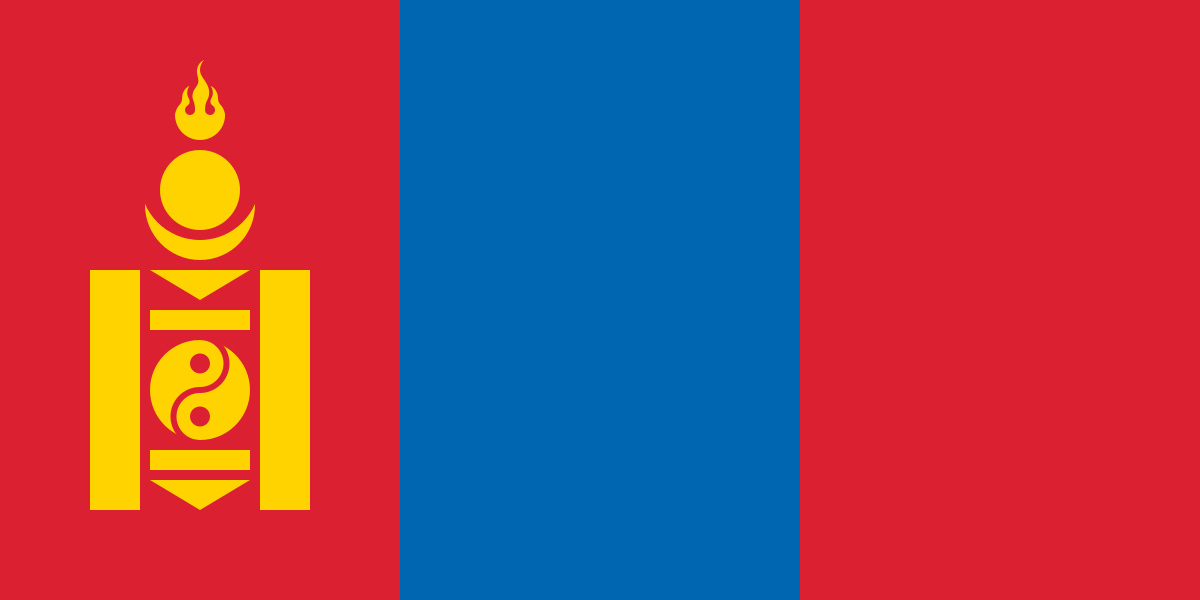
Primary Sector of Mongolia
Mongolia’s primary sector, particularly its agricultural activities, plays a vital role in the country’s economy. With 72.32% of the land dedicated to agriculture, the sector produces a diverse range of products including milk, wheat, potatoes, lamb/mutton, goat milk, beef, goat meat, bison milk, sheep milk, and horse meat.
Despite contributing approximately 9.9% to the GDP (as of 2023), agriculture remains essential for food security and livelihoods. The variety of crops and animal products showcase the sector’s significance, providing sustenance and income for many Mongolians.
The country’s diverse geology provides abundant natural resources, driving its primary sector. Rich in oil, coal, copper, molybdenum, and more, these resources fuel the economy through mining and export industries.Mongolia’s oil production of approximately 16,703 barrels per day places it at the 50th position in the world ranking. With significant oil reserves, the country contributes to the global energy market.Secondary Sector of Mongolia
In Mongolia, main industrial products include construction materials, coal, copper, molybdenum, fluorspar, tin, tungsten, gold, oil, food and beverages, animal product processing, cashmere, and natural fiber manufacturing.Manufactures in Mongolia’s total exports only account for 1.32% in 2023, highlighting their limited significance in the country’s export industry.Tertiary sector of Mongolia
Military Activities and Economic Sectors of Mongolia
The secondary sector makes military equipment, while the tertiary sector provides services, such as training and logistics. The quaternary sector focuses on research and development for advanced military technology, and the quinary sector involves high-level decision-making and strategy planning.
In Mongolia, the military expenditure for 2024 is approximately $180.8 million, which is roughly 0.6% of GDP (as of 2024). The active military force consists of about 9,700 personnel.
International Trade of Mongolia
Import Activities of Mongolia
 Mongolia’s import activities are of high importance, with total imports in 2024 amounting to approximately $11.60 billion, around 48.8% of the country’s GDP.Mongolia’s key import activities include refined petroleum, cars, trucks, trailers, and raw iron bars. Its primary import partners are China and Russia, which together supply the large majority of imports, followed by Japan, South Korea, and the United States (as of 2023).
Exports Activities of Mongolia
 Export activities in Mongolia are of high importance, accounting for approximately 66% of GDP in 2024, totaling about $15.76 billion. This highlights the significant role exports play in driving the country’s economy.Mongolia’s export activities are primarily focused on coal, copper ore, gold, animal hair, and iron ore. China is by far the dominant destination, taking roughly 90% of Mongolia’s exports, followed by Switzerland and smaller volumes to Singapore and other partners (as of 2023).
Mongolia economy challenges in 2024
Mongolia, a lower middle-income East Asian economy, faces challenges in 2024. Despite human capital improvements, high inflation from supply bottlenecks and rising food and energy prices, along with currency depreciation, hinder growth. Agricultural and natural resources offer potential, but economic stability remains a concern.Sources
- World Bank Data: Mongolia
- IMF: Mongolia
- CIA World Factbook: Mongolia
- Trading Economics: Mongolia
- UN Comtrade Plus: Trade Flow
Last updated: August 2026

Leave a Reply