
Key Economic Insights: The economy of Portugal generates an estimated GDP of $346.6 billion ($32,082 per capita) supporting a population of 10,804,871. Productive output is anchored by 66.6% services, 18.3% industry and manufacturing, and 2.0% agriculture and natural resource extraction.
As of 2025, Portugal’s economy remains relatively stable, with a GDP of $346.6 billion. Portugal’s GDP per capita stood at $32,082 as of 2025.
Despite facing challenges, Portugal’s economy continues to show resilience and potential for growth in the coming years.
Portugal Economic Structure & Sector Analysis
| Economic Dimension | Figure | Authoritative Source |
|---|---|---|
| GDP & Macro Output | Nominal GDP: $346.6 billion | Per Capita: $32,082 | World Bank WDI / IMF |
| Sector Breakdown | Services: 66.6% | Industry: 18.3% | Agriculture: 2.0% | World Bank National Accounts |
| Demographics & Labor | Population: 10,804,871 | ILO / UN Population Division |
- Primary activities: 2.0% of gross value added (as of 2025).
- Secondary activities: 18.3% of gross value added (as of 2025).
- Tertiary activities: 66.6% of gross value added (as of 2025).
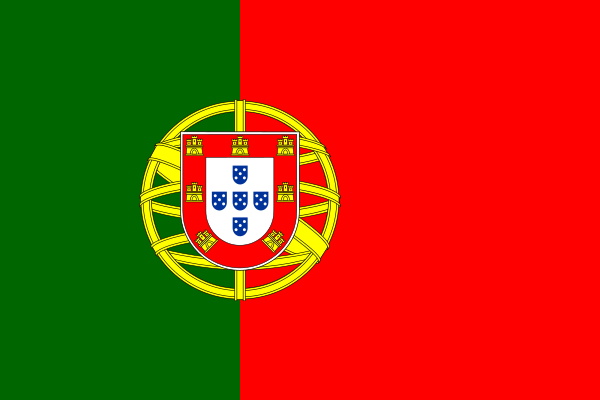
Primary Sector of Portugal
With 43.25% of the land dedicated to agriculture, the country produces a variety of products such as milk, tomatoes, grapes, olives, maize, oranges, pork, potatoes, chicken, and apples.
Agriculture contributes about 2.0% of gross value added (as of 2025) but remains important to the economy. The sector’s significance lies in the wide range of crops and animal products it produces, ensuring food security and sustainability for the country.
The country’s diverse geology provides a rich array of natural resources. These include fish, cork forests, iron ore, copper, zinc, tin, tungsten, silver, gold, uranium, marble, clay, gypsum, salt, arable land, and hydropower. These resources support industries such as mining, agriculture, and energy production.Secondary Sector of Portugal
In Portugal, main industrial products include textiles, clothing, footwear, wood, cork, paper, chemicals, fuels, automobiles, base metals, minerals, ceramics, glassware, technology, dairy products, wine, food, ship construction, plastics, and optics.Manufactures accounted for 74.86% of Portugal’s total exports in 2023. This highlights the significant contribution of the manufacturing sector to the country’s economy and export performance.Tertiary sector of Portugal

Military Activities and Economic Sectors of Portugal
In the primary sector, resources are extracted for military use. The secondary sector includes the manufacturing of military equipment, while the tertiary sector covers the services provided by the military. The quaternary sector focuses on military research and development, and the quinary sector involves high-level military decision-making and strategy.
As of 2024, Portugal’s military expenditure was about 4.6 billion US dollars, roughly 1.6% of its GDP. The active military force consists of approximately 24,000 personnel, giving a ratio of about 2.2 active military members for every 1,000 people in the country.
International Trade of Portugal
Import Activities of Portugal
 Portugal’s high import activities, with imports of goods and services of about 126.6 billion euros (roughly 44% of GDP) as of 2024, reflect its reliance on foreign goods and services for economic growth and development.Portugal’s key import activities include crude petroleum, cars, refined petroleum, natural gas, and vehicle parts/accessories. Its main import partners are Spain (31%), Germany (11%), France (6%), China (5%), and Italy (5%).
Exports Activities of Portugal
 As of 2024, Portugal’s total exports of goods and services reached a record 133.1 billion euros, equivalent to roughly 46.5% of GDP. With such high export dependence, the country’s economy relies heavily on these activities.Portugal’s export activities are diversified, with key partners including Spain, France, Germany, US, and UK. Major export commodities are cars, garments, refined petroleum, vehicle parts/accessories, and plastic products.
Portugal economy challenges in 2024
In 2024, Portugal faces economic challenges despite a strong services sector. High public debt and a tight labor market hinder growth. The EU Recovery and Resilience Plan offers hope for public investment, but the country struggles to improve its fiscal position.Sources
- World Bank: Portugal
- IMF: Portugal
- Statistics Portugal (INE)
- UN Comtrade Plus: Trade Flow
- SIPRI Military Expenditure Database
Last updated: October 2026



Leave a Reply