
Key Economic Insights: The economy of Ghana generates an estimated GDP of $82.31 billion ($2,391 per capita) supporting a population of 34.1 million. Productive output is anchored by 57.2% services, 24.5% industry and manufacturing, and 18.3% agriculture and natural resource extraction. Key merchandise exports include Manufactured goods, mineral resources, and agricultural commodities, directed primarily toward key commodities being gold, crude petroleum, cocoa beans, and a variety of nuts.
As of 2024, Ghana’s GDP stands at approximately $82.31 billion (current US$), with a GDP per capita of about $2,390.80, according to the World Bank. The economy has been recovering from a debt crisis, supported by an IMF programme, strong gold prices, and oil and cocoa exports.
Despite past fiscal challenges, Ghana’s economy shows potential for continued growth and development in the coming years.
Ghana Economic Structure & Sector Analysis
| Economic Dimension | Official Indicator (2024–2026) | Authoritative Source |
|---|---|---|
| GDP & Macro Output | Nominal GDP: $82.31 billion | Per Capita: $2,391 | World Bank WDI / IMF |
| Sector Breakdown | Services: 57.2% | Industry: 24.5% | Agriculture: 18.3% | World Bank National Accounts |
| Trade & Commodities | Top Exports: Manufactured goods, mineral resources, and agricultural commodities (Total: $24.5 billion) | UN Comtrade / OEC |
| Demographics & Labor | Population: Official Census Tracked | Distributed workforce across formal & primary sectors | ILO / UN Population Division |
| Strategic Trade Corridors | Leading Trade Partners: key commodities being gold, crude petroleum, cocoa beans, and a variety of nuts | World Bank WITS / IMF DOTS |
- Primary activities: 18.3% of GDP.
- Secondary activities: 24.5% of GDP.
- Tertiary activities: 57.2% of GDP.
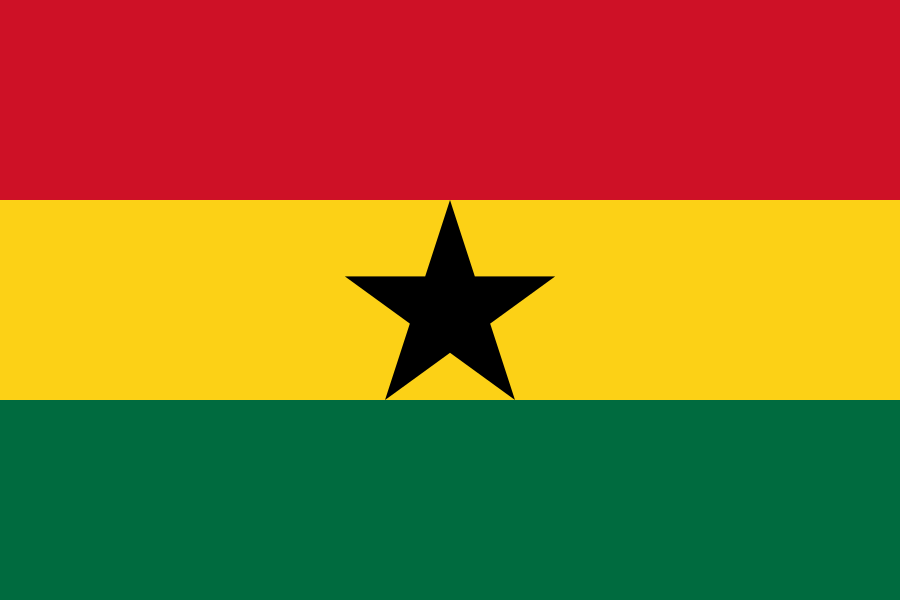
Primary Sector of Ghana
With 55.39% of the country’s land dedicated to agriculture, Ghana produces a variety of crops like cassava, yams, plantains, maize, oil palm fruit, taro, rice, cocoa beans, oranges, and pineapples.
Despite agriculture contributing 18.3% to the GDP, it plays a crucial role in the economy by providing employment and sustaining livelihoods. The diverse range of agricultural products highlights the sector’s significance, ensuring food security and export opportunities for the country.
Ghana’s rich geological diversity results in abundant natural resources, driving its primary sector. The country’s main resources include gold, timber, industrial diamonds, bauxite, manganese, fish, rubber, hydropower, petroleum, silver, salt, and limestone, contributing significantly to its economy.Ghana’s oil production of around 179,890 barrels per day ranks it 23rd globally. With oil reserves of 660 million barrels, it holds 0.04% of the world’s oil reserves, further boosting its economic activity.Ghana’s gas production of 554 million m³ in 2020 ranks it 72nd globally, further boosting its economic activity.Secondary Sector of Ghana
In Ghana, the main industrial products include lumbering, light manufacturing, aluminum smelting, food processing, cement production, small commercial shipbuilding, and petroleum refining. These products contribute significantly to Ghana’s economy and export market.In 2023, Ghana’s manufactures exports accounted for only 5.99% of the total exports, indicating their relatively limited significance in the country’s export sector.Tertiary sector of Ghana
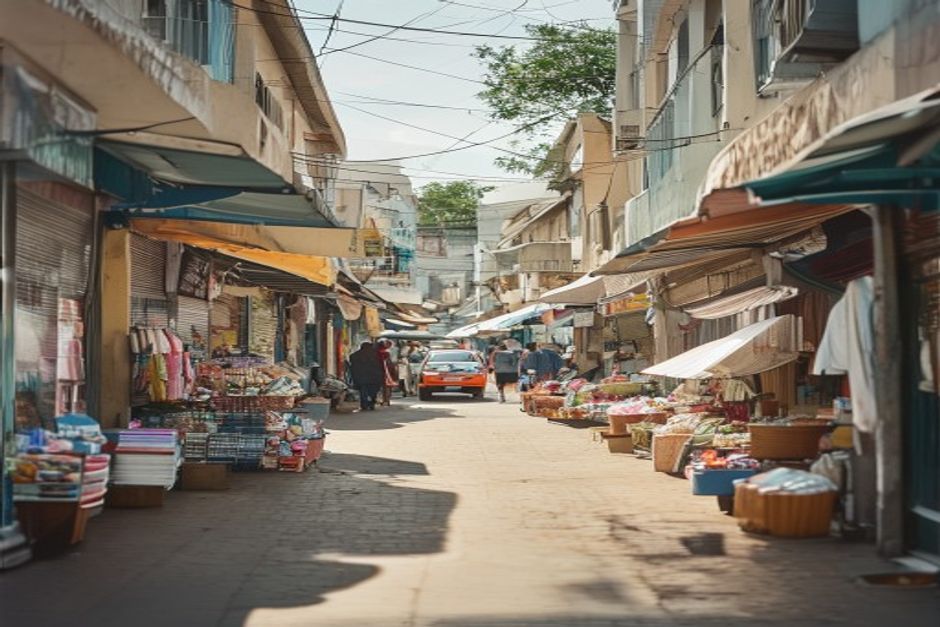
Military Activities and Economic Sectors of Ghana
In the primary sector, resources are extracted for military needs. The secondary sector involves making military equipment. The tertiary sector includes services like training and support. The quaternary sector focuses on research and development for better technology. Finally, the quinary sector deals with high-level decisions and strategies for the military.
In Ghana, the military expenditure for 2023 is 285.4 million US dollars, which is 0.35% of the country’s GDP. The active military force has 15,500 personnel, resulting in 0.6 active military members for every 1,000 people in the population.
Biggest company in Ghana
Which is the biggest company in Ghana? The largest company is MTN Ghana (Scancom PLC), the most valuable company listed on the Ghana Stock Exchange, with a market capitalization exceeding GH₵59 billion as of 2025. It reported service revenue of about GH₵17.9 billion in 2024 (up 34.5%). MTN Ghana operates in the telecommunications and mobile money sector, part of the tertiary sector.International Trade of Ghana
Import Activities of Ghana
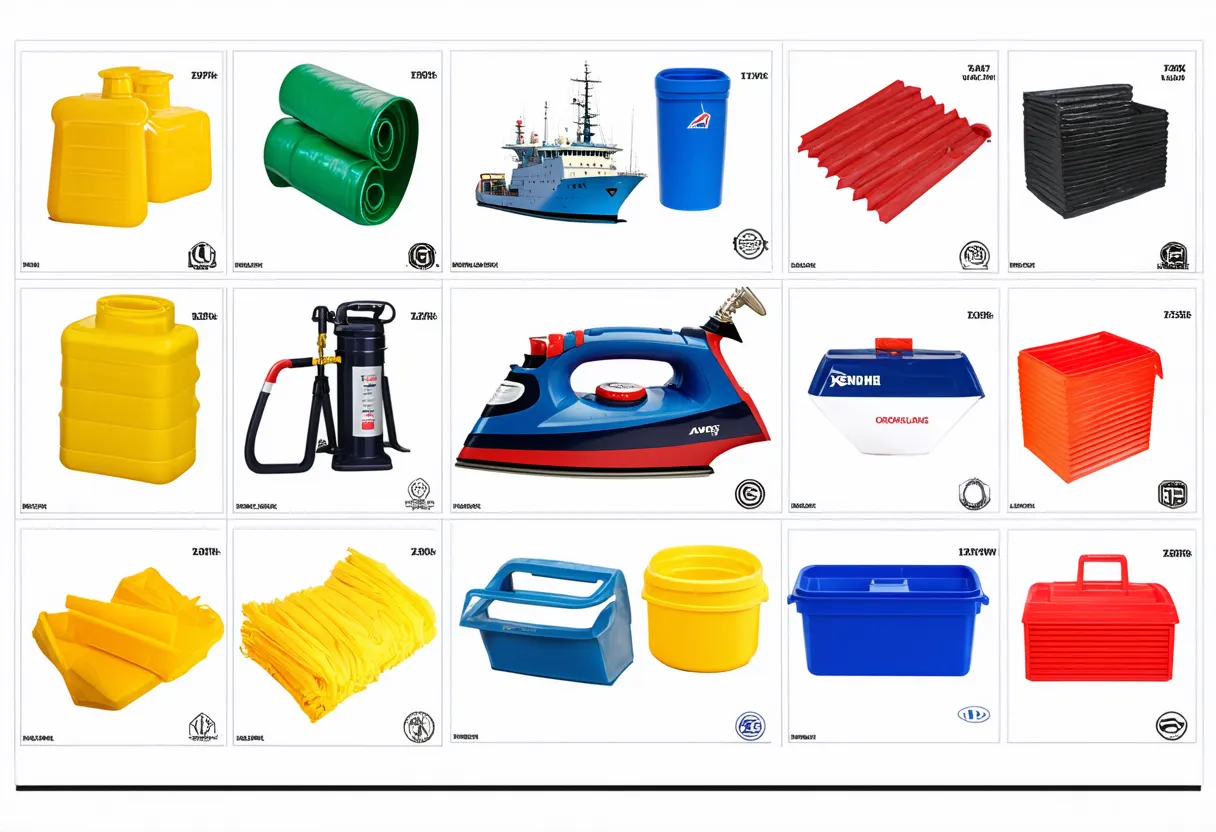 Ghana’s imports totaled roughly GH₵250 billion in 2024 (around a quarter of GDP), and remain crucial for economic growth, consumer access, and global trade integration.Ghana’s key import activities include refined petroleum, plastic products, garments, coated flat-rolled iron, and ships. Major import partners are China (41%), Netherlands (7%), India (5%), US (5%), and Cote d’Ivoire (4%).
Exports Activities of Ghana
 In 2024, Ghana’s total exports reached approximately $24.5 billion (GH₵294.9 billion), equivalent to roughly 30% of GDP and producing a trade surplus, according to the Ghana Statistical Service. This high export contribution underscores the vital role of export activities in driving economic growth and stability in the country.Ghana’s export activities focus on gold, crude petroleum, cocoa beans, and various nuts. The country’s top export partners are the UAE, Switzerland, the US, India, and China, with key commodities being gold, crude petroleum, cocoa beans, and a variety of nuts.
Ghana economy challenges in 2024
In 2024, Ghana faces economic challenges despite past growth. Debt restructuring and fiscal reforms are ongoing under an IMF program. Maintaining financial stability and curbing inflation remain top priorities for the West African nation.Sources
- World Bank: Ghana
- IMF: Ghana
- CIA World Factbook: Ghana
- Ghana Statistical Service
- UN Comtrade Plus: Trade Flow
Last updated: August 2026



Leave a Reply