

Author:
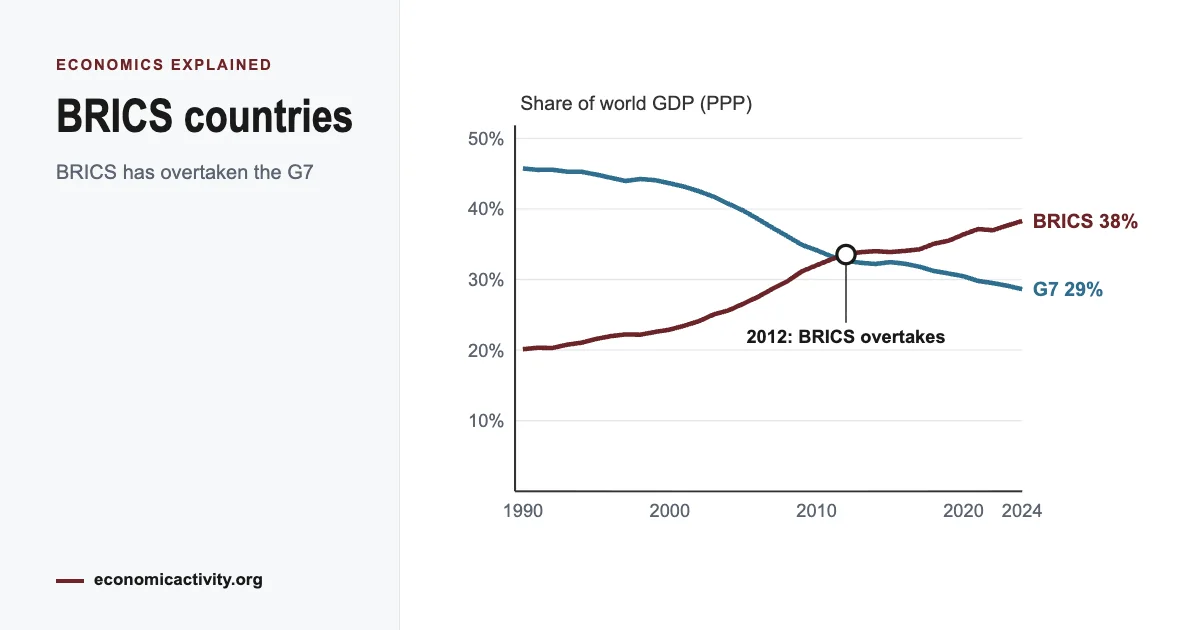
What Are the BRICS Countries? Members, Meaning and Economy (2026)
BRICS stands for Brazil, Russia, India, China and South Africa. After its 2024-2025 expansion it has about 10 members producing 36.7% of world GDP (PPP).
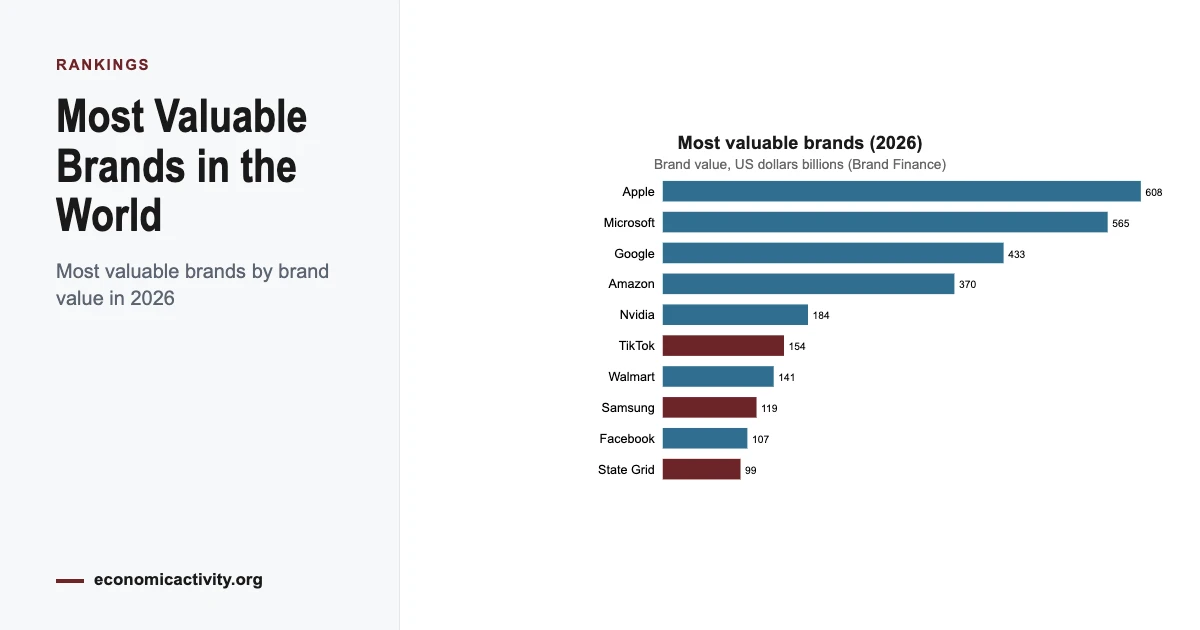
The Most Valuable Brands in the World (2026)
Apple is the most valuable brand in the world (~$608 billion), ahead of Microsoft, Google and Amazon. Brand value measures the name and reputation, not the whole company.
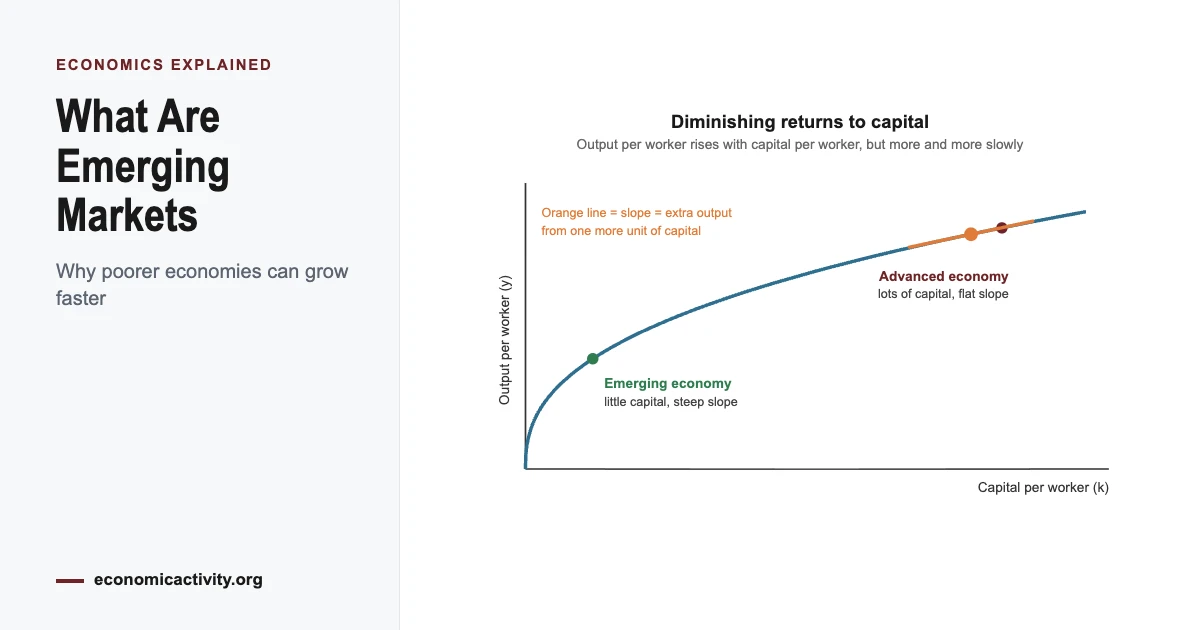
What Are Emerging Markets? Definition and Examples (2026)
An emerging market is an economy transitioning from developing to developed, such as China, India and Brazil. Emerging economies grow about 4% a year vs 1.5% for advanced ones (IMF).
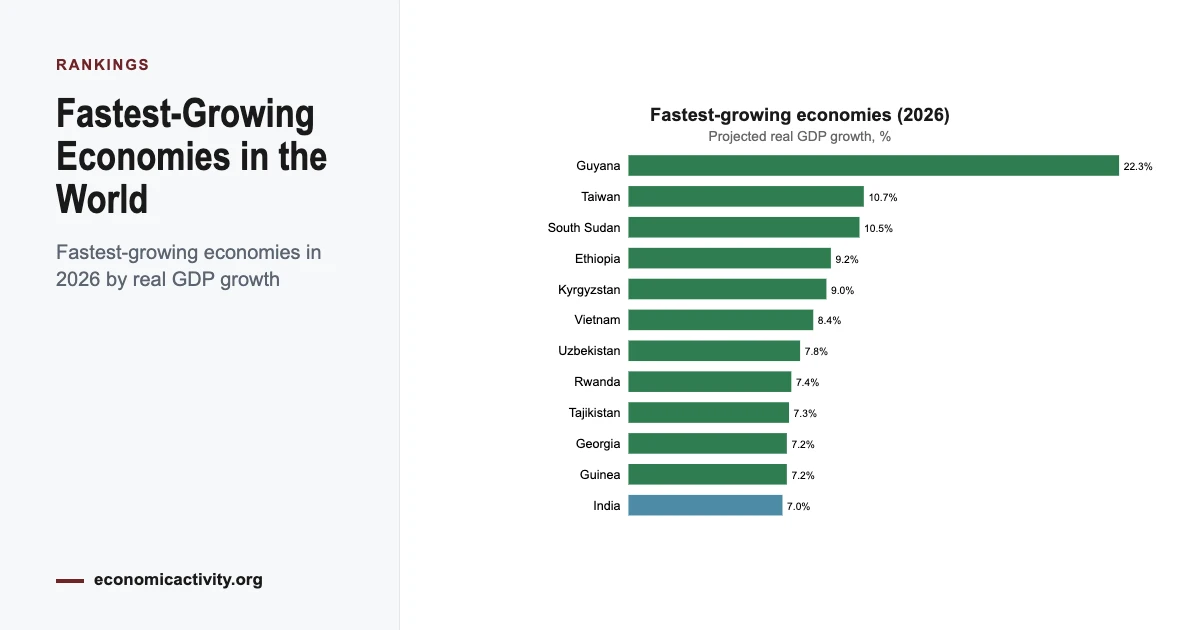
The Fastest-Growing Economies in the World (2026)
Guyana is the world fastest-growing economy at roughly 16% in 2026, driven by oil (IMF). India is the fastest-growing major economy at about 6.2%.
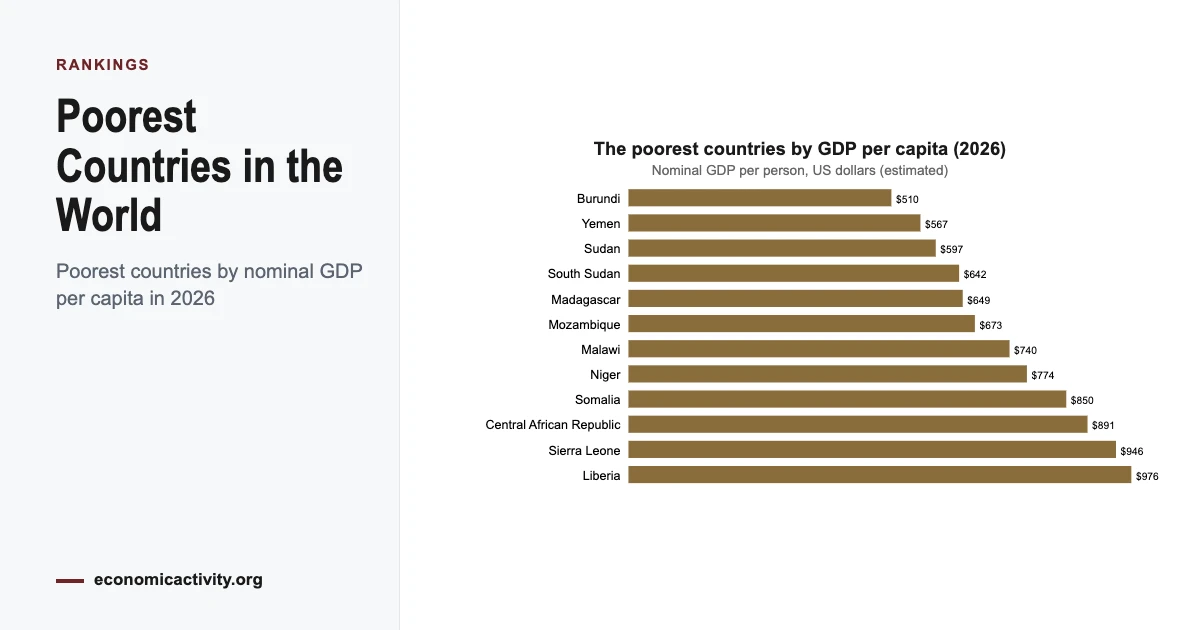
The Poorest Countries in the World (2026)
The poorest countries by GDP per capita are conflict-affected and Sub-Saharan African nations. About 838 million people live in extreme poverty (World Bank).
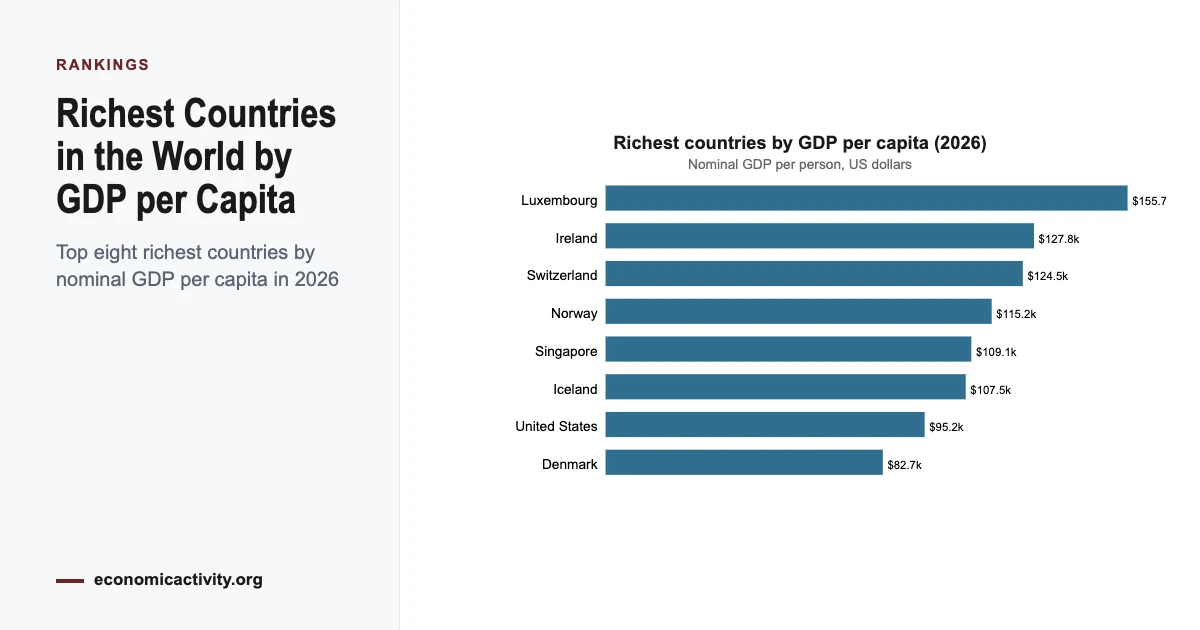
The Richest Countries in the World by GDP per Capita (2026)
Luxembourg is the richest country by nominal GDP per capita (~$158,700), but Ireland and Luxembourg figures are inflated by multinationals and cross-border workers.
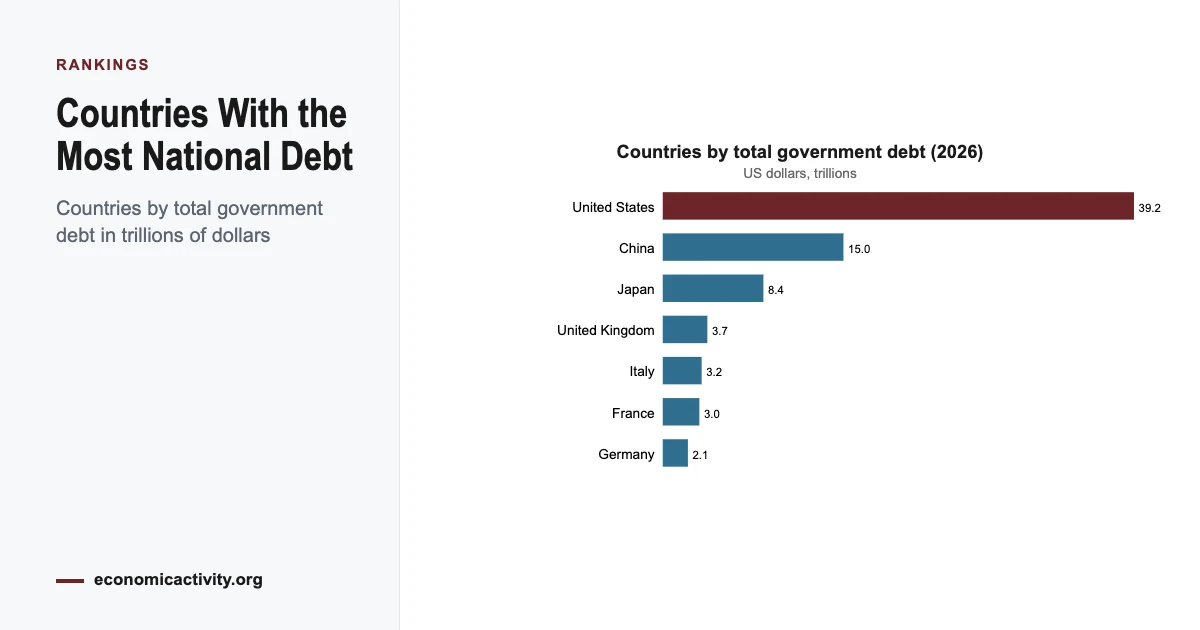
Countries With the Most National Debt (2026)
The US has the most national debt by amount (~$39 trillion), but Japan has the highest debt relative to its economy (over 200% of GDP). Debt is the total of past deficits.
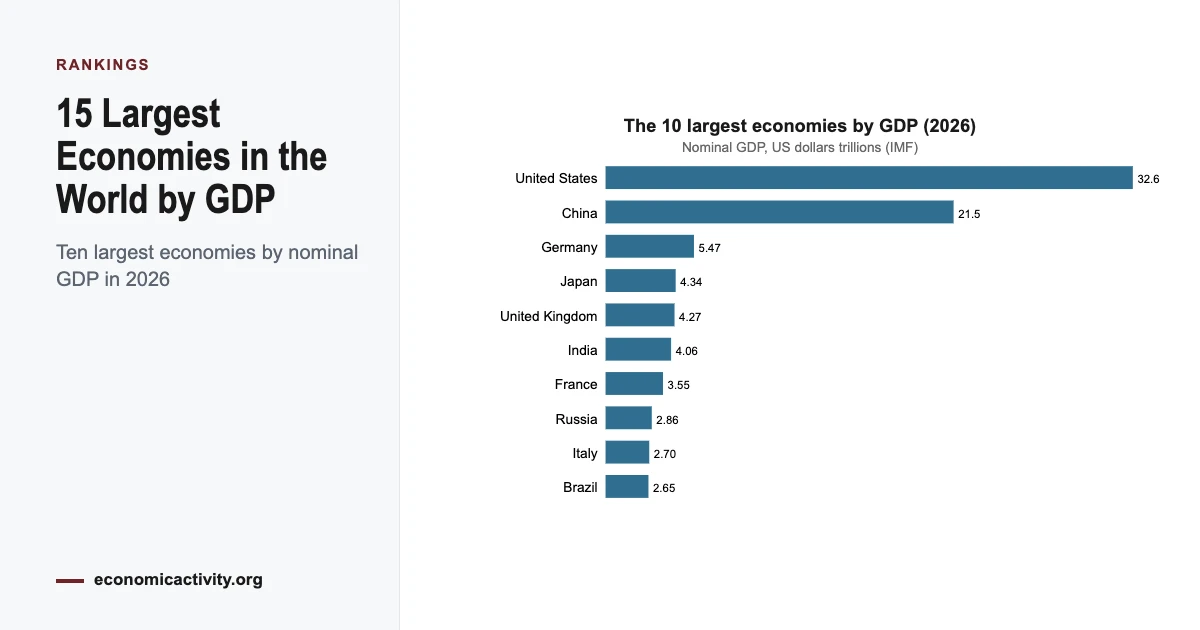
The 15 Largest Economies in the World by GDP (2026)
The US (about $32.4 trillion) and China (about $20.9 trillion) are the world largest economies in 2026, together making up roughly 42% of world GDP (IMF).
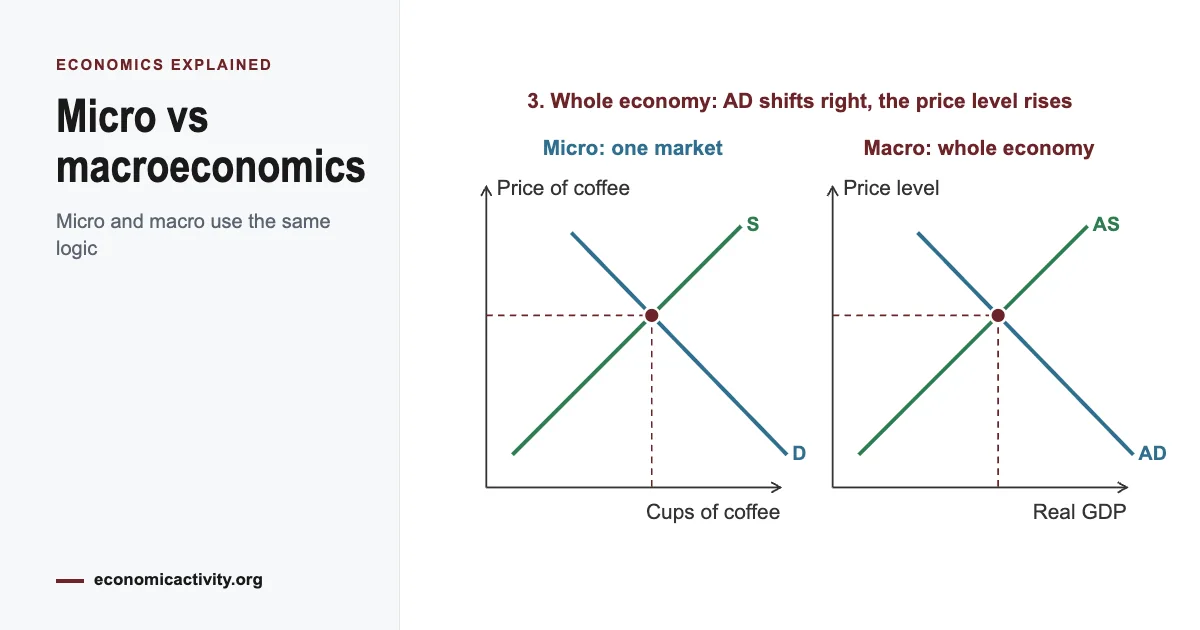
Microeconomics vs Macroeconomics: Key Differences
Microeconomics studies individual markets and firms; macroeconomics studies the whole economy – GDP, inflation and unemployment. They are two halves of the same subject.
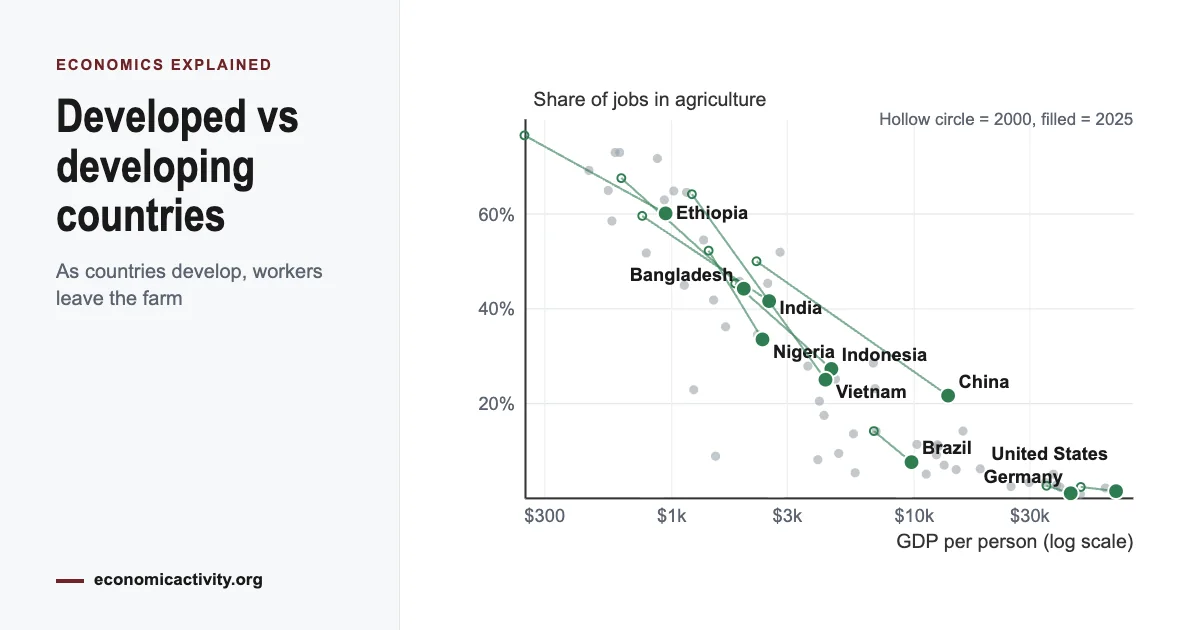
Developed vs Developing Countries: Definitions and Differences
Developed countries have high incomes and service economies; developing countries rely more on agriculture. The World Bank, IMF and UN each classify them differently.