
Key Economic Insights: The economy of Haiti generates an estimated GDP of $25.22 billion ($1,155 per capita) supporting a population of 11.7 million. Productive output is anchored by Tracked by World Bank services, Tracked by World Bank industry and manufacturing, and Tracked by World Bank agriculture and natural resource extraction. Key merchandise exports include Manufactured goods, mineral resources, and agricultural commodities, directed primarily toward Global and regional trade partners.
Haiti’s economic position (As of 2024) reflects a GDP of about $25.22 billion. In terms of GDP per capita, Haiti’s figure stands at about $1,154.87 (As of 2024) — among the lowest in the Western Hemisphere, reflecting years of economic contraction amid a gang-violence crisis and currency depreciation.
Despite facing challenges, Haiti continues to work towards economic growth and development, aiming to improve its position on the global economic stage.
Haiti Economic Structure & Sector Analysis
| Economic Dimension | Official Indicator (2024–2026) | Authoritative Source |
|---|---|---|
| GDP & Macro Output | Nominal GDP: $25.22 billion | Per Capita: $1,155 | World Bank WDI / IMF |
| Sector Breakdown | Services: Tracked by World Bank | Industry: Tracked by World Bank | Agriculture: Tracked by World Bank | World Bank National Accounts |
| Trade & Commodities | Top Exports: Manufactured goods, mineral resources, and agricultural commodities (Total: $3.99 billion) | UN Comtrade / OEC |
| Demographics & Labor | Population: Official Census Tracked | Distributed workforce across formal & primary sectors | ILO / UN Population Division |
| Strategic Trade Corridors | Leading Trade Partners: Global and regional trade partners | World Bank WITS / IMF DOTS |
- Primary activities: ~22% of GDP (As of 2017 est.).
- Secondary activities: ~21% of GDP (As of 2017 est.).
- Tertiary activities: ~57% of GDP (As of 2017 est.).
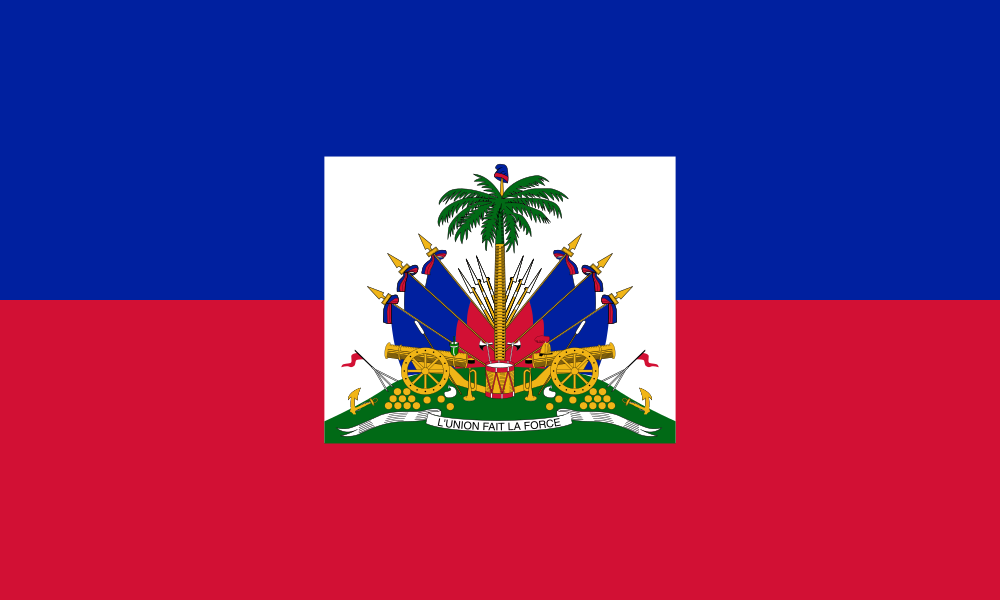
Primary Sector of Haiti
With 65.13% of the land dedicated to agriculture, the country produces a diverse range of products including sugarcane, cassava, mangoes/guavas, plantains, bananas, maize, avocados, tropical fruits, rice, and vegetables.
Despite agriculture contributing about 22% to the GDP (As of 2017 est.), the sector plays a crucial role in providing livelihoods and sustenance for many Haitians. The variety of crops and animal products highlights the importance of agriculture in ensuring food security and economic stability in the country.
The country’s rich geological diversity provides a wide range of natural resources. These include bauxite, copper, calcium carbonate, gold, marble, and abundant hydropower. The vast arable land also supports agriculture, driving the economy through mining and agriculture sectors.Secondary Sector of Haiti
In Haiti, the main industrial products include textiles, sugar refining, flour milling, cement, and light assembly using imported parts. These products play a significant role in the country’s economy and contribute to its industrial growth.In 2023, manufactures accounted for a small percentage of Haiti’s total exports, indicating their limited significance in driving the country’s economy and trade.Tertiary sector of Haiti
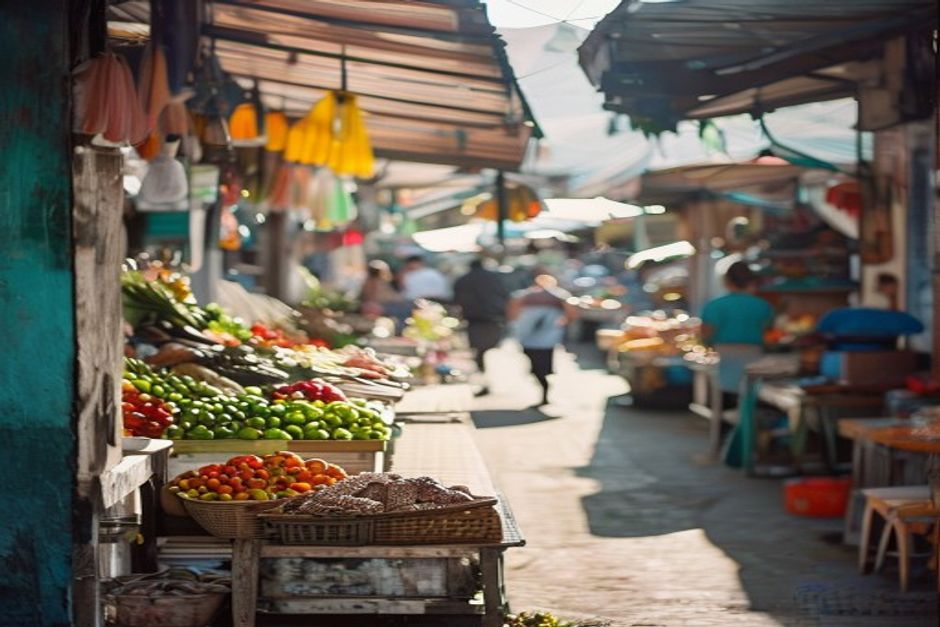
Military Activities and Economic Sectors of Haiti
It involves the primary sector through resource extraction for military use, the secondary sector by manufacturing military equipment, and the tertiary sector by providing various services. Additionally, the military engages in the quaternary sector with research and development, and the quinary sector for high-level decision-making and strategy.
In Haiti, the most recent annual military expenditure is 11.7 million US dollars, which is 0.069% of the country’s GDP. The active military force consists of 700 personnel, resulting in 0.1 active military members per 1,000 capita.
International Trade of Haiti
Import Activities of Haiti
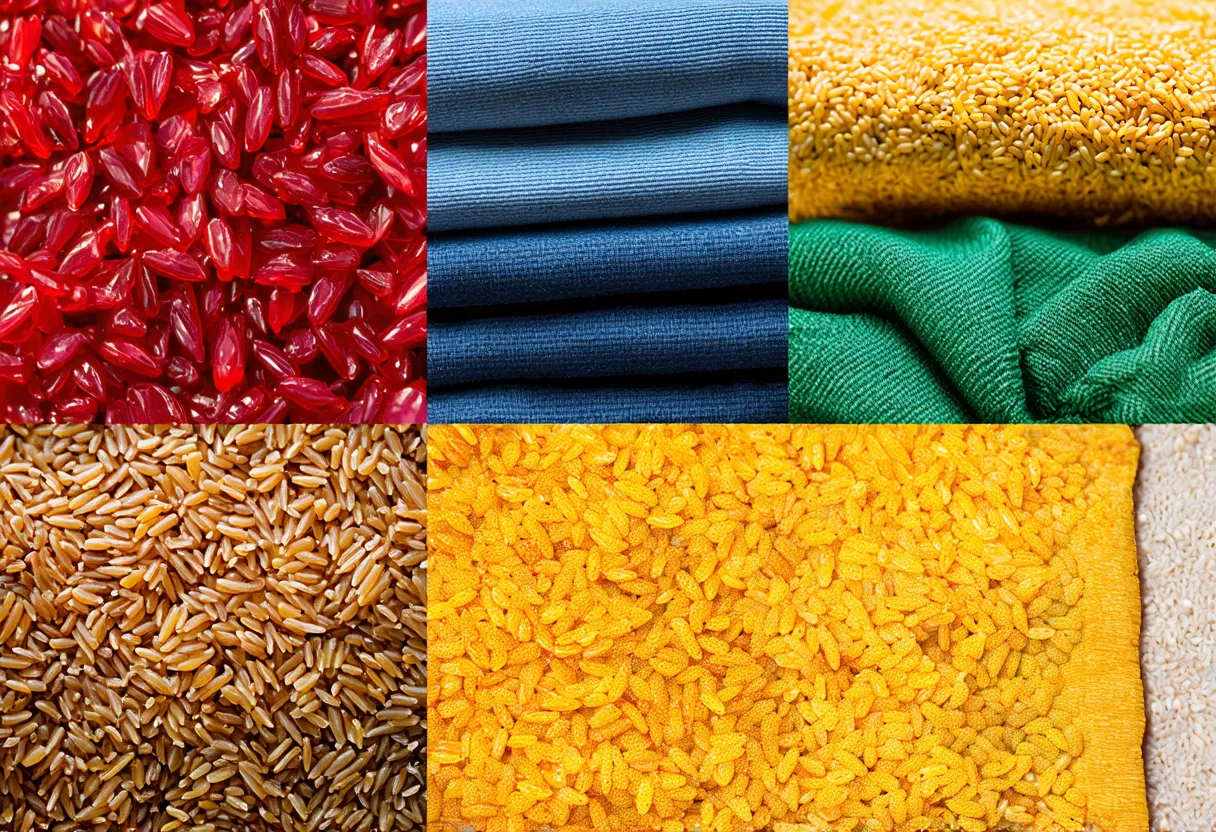 Haiti’s import activities are substantial, with goods imports of about $3.99 billion in 2023 (As of 2023), equivalent to roughly 20% of GDP — reflecting the country’s chronic structural trade deficit.Haiti’s key import activities include refined petroleum, rice, cotton fabric, garments, and plastic products. The country’s top import partners are the US (31%), Dominican Republic (26%), China (16%), Indonesia (3%), and India (2%).
Exports Activities of Haiti
 Haiti’s goods exports in 2023 amounted to about $896 million (As of 2023), representing roughly 4% of its GDP. With a low export contribution and imports far exceeding exports, remittances — equivalent to about 15% of GDP in 2024 — remain the country’s primary source of foreign exchange.Haiti’s export activities are primarily focused on garments, essential oils, scrap iron, bedding, and tropical fruits. The country’s main export partners are the US (84%), Canada (4%), Mexico (2%), Thailand (1%), and France (1%).
Haiti economy challenges in 2024
In 2024, Haiti continues to face challenges with extreme poverty, high inflation, and income inequality. Civil unrest persists following the recent presidential assassination. Despite preferential market access to the US and openness to foreign investment, the country struggles to stabilize its economy and political situation.Sources
- World Bank: Haiti Data
- IMF: Haiti Country Profile
- CIA World Factbook: Haiti
- Trading Economics: Haiti
- UN Comtrade Plus: Trade Flow
Last updated: August 2026



Leave a Reply