
Key Economic Insights: The economy of Vanuatu generates an estimated GDP of $1.16 billion (National Accounts Tracked per capita) supporting a population of 327,777. Productive output is anchored by Tracked by World Bank services, Tracked by World Bank industry and manufacturing, and Tracked by World Bank agriculture and natural resource extraction. Key merchandise exports include fish, perfume plants, copra, shellfish, and cocoa beans, directed primarily toward Global and regional trade partners.
As of 2024, Vanuatu’s economy is positioned at a GDP of approximately $1.16 billion (current US$), ranking among the world’s smallest economies. The GDP per capita for Vanuatu in 2024 is approximately $3,543 (current US$), placing it among lower-middle-income nations.
Vanuatu’s economic position reflects its status as a developing nation with potential for growth and development in the coming years.
Vanuatu Economic Structure & Sector Analysis
| Economic Dimension | Official Indicator (2024–2026) | Authoritative Source |
|---|---|---|
| GDP & Macro Output | Nominal GDP: $1.16 billion | Per Capita: National Accounts Tracked | World Bank WDI / IMF |
| Sector Breakdown | Services: Tracked by World Bank | Industry: Tracked by World Bank | Agriculture: Tracked by World Bank | World Bank National Accounts |
| Trade & Commodities | Top Exports: fish, perfume plants, copra, shellfish, and cocoa beans (Total: Official UN Comtrade) | UN Comtrade / OEC |
| Demographics & Labor | Population: 327,777 | Distributed workforce across formal & primary sectors | ILO / UN Population Division |
| Strategic Trade Corridors | Leading Trade Partners: Global and regional trade partners | World Bank WITS / IMF DOTS |
- Primary activities (agriculture, forestry, fishing): about 24.9% of GDP (2022).
- Secondary activities (industry): about 7.6% of GDP (2022).
- Tertiary activities (services): about 60.5% of GDP (2022).

Primary Sector of Vanuatu
With 15.34% of the land dedicated to agriculture, the country produces a diverse range of products including coconuts, root vegetables, bananas, and pork. Despite contributing about 24.9% to GDP (2022, World Bank), agriculture plays a crucial role in the economy.
The top ten agricultural products by tonnage showcase the importance of crops and animal products, such as vegetables, fruits, beef, and tropical fruits, in sustaining the country’s agricultural sector.
Abundant manganese deposits, extensive hardwood forests, and thriving fish stocks drive the economy. These resources support industries like mining, logging, and fishing, providing essential income and employment opportunities for the local population.Secondary Sector of Vanuatu
In Vanuatu, main industrial products include food and fish freezing, wood processing, and meat canning. These activities add value to raw materials, creating products for domestic consumption or export.In 2023, Vanuatu’s manufactures exports accounted for a small percentage of the total exports, indicating their limited significance in the country’s economy.Tertiary sector of Vanuatu
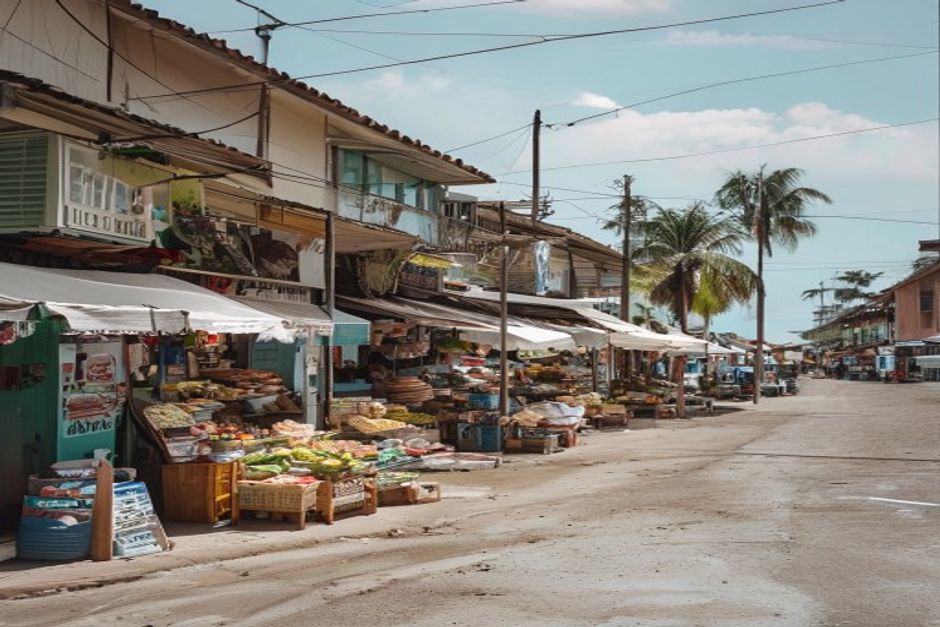
Biggest company in Vanuatu
Which is the biggest company in Vanuatu? The largest domestic company is the National Bank of Vanuatu (NBV), the country’s principal commercial bank. Headquartered in Port Vila and majority-owned by the Vanuatu National Provident Fund and the Government of Vanuatu, it operates the widest branch network in the country and sits within the tertiary (services) sector.International Trade of Vanuatu
Import Activities of Vanuatu
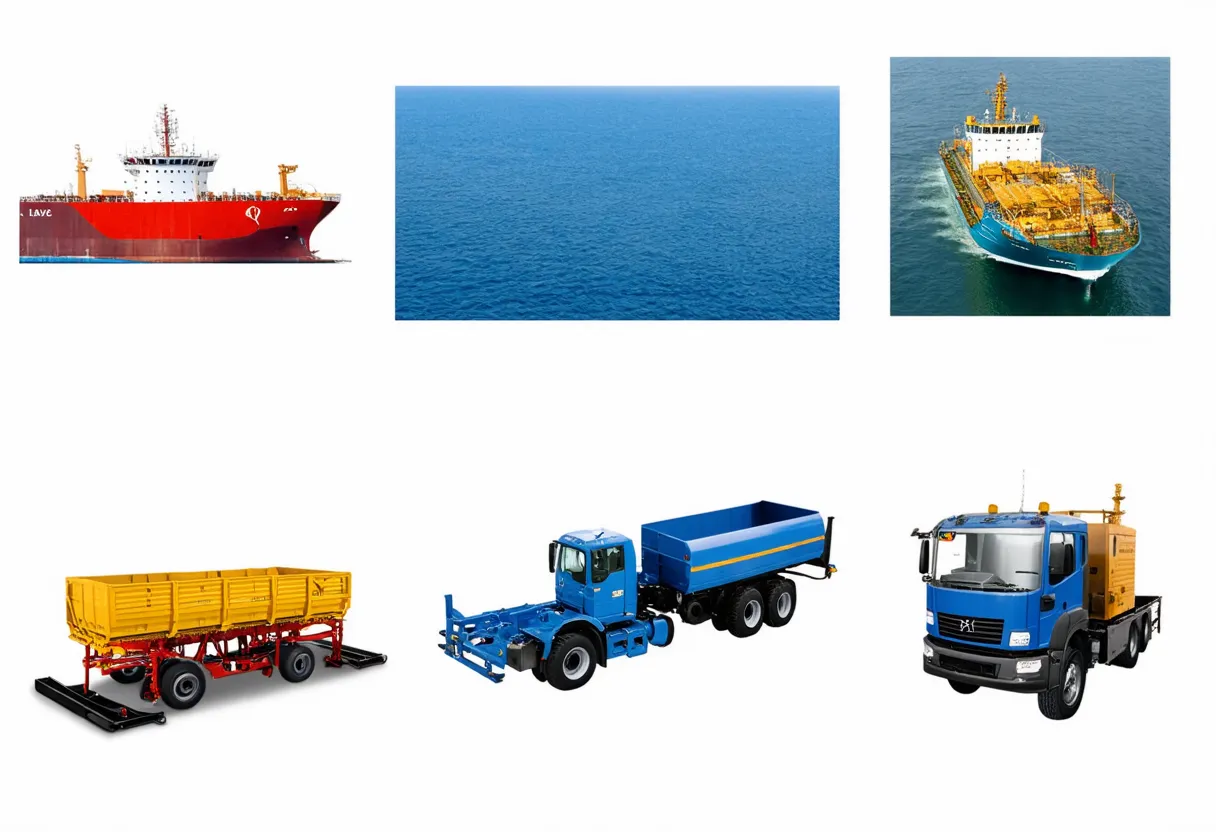 Vanuatu’s import activities are crucial, accounting for 53.69% of GDP, reflecting heavy reliance on imported goods for economic growth.Vanuatu’s import activities are significant, with China being the largest partner at 24%. Imports include refined petroleum, ships, plastic products, poultry, and broadcasting equipment from Australia, Malaysia, New Zealand, and Fiji.
Exports Activities of Vanuatu
 Vanuatu’s total exports in 2023 amounted to $156,448,979.71. With exports contributing to 14.82% of its GDP, the country’s export activities hold medium importance in driving economic growth and sustainability.Vanuatu primarily exports fish, perfume plants, copra, shellfish, and cocoa beans. Its key export partners are Thailand (42%), Japan (27%), South Korea (7%), the Philippines (6%), and China (5%).
Vanuatu economy challenges in 2024
Vanuatu faces challenges in 2024 with a struggling economy heavily reliant on agriculture and tourism. The country is still recovering from the impacts of the pandemic and Tropical Cyclone Harold. Inflation is a significant issue, and road infrastructure aid from Australia is crucial for development.Sources
- World Bank Data: Vanuatu
- IMF Data Mapper: Vanuatu
- Heritage Foundation: All Country Scores
- CIA World Factbook: Vanuatu
- Our World in Data: Human Development Index
- UN Comtrade Plus: Trade Flow
- sipri
Last updated: August 2026




Leave a Reply