
Key Economic Insights: The economy of Samoa generates an estimated GDP of $1.18 billion ($5,393 per capita) supporting a population of 222,000. Productive output is anchored by 66% services, 23.6% industry and manufacturing, and 10.4% agriculture and natural resource extraction. Key merchandise exports include coconut oil, integrated circuits, insulated wire, citrus, and power equipment, directed primarily toward Global and regional trade partners.
As of 2024, Samoa’s GDP was about $1.18 billion (current US$), per the World Bank, with real GDP growth of roughly 4.7%. In terms of GDP per capita, Samoa stood at about $5,393 (current US$, 2024).
Despite its lower ranking, Samoa’s economy is steadily growing, with potential for further development in various sectors. The country’s focus on sustainable practices and tourism has the potential to boost its economic standing in the future.
Samoa Economic Structure & Sector Analysis
| Economic Dimension | Official Indicator (2024–2026) | Authoritative Source |
|---|---|---|
| GDP & Macro Output | Nominal GDP: $1.18 billion | Per Capita: $5,393 | World Bank WDI / IMF |
| Sector Breakdown | Services: 66% | Industry: 23.6% | Agriculture: 10.4% | World Bank National Accounts |
| Trade & Commodities | Top Exports: coconut oil, integrated circuits, insulated wire, citrus, and power equipment (Total: Official UN Comtrade) | UN Comtrade / OEC |
| Demographics & Labor | Population: Official Census Tracked | Distributed workforce across formal & primary sectors | ILO / UN Population Division |
| Strategic Trade Corridors | Leading Trade Partners: Global and regional trade partners | World Bank WITS / IMF DOTS |
- Primary activities: 10.4% of GDP.
- Secondary activities: 23.6% of GDP.
- Tertiary activities: 66% of GDP.

Primary Sector of Samoa
With 17.77% of the land dedicated to agriculture, the country produces a variety of crops like coconuts, taro, bananas, pineapples, and more. Despite contributing 10.4% to the GDP, agriculture remains vital to the economy.
The top ten agricultural products by tonnage include tropical fruits, root vegetables, milk, and pork, highlighting the sector’s diversity and importance in sustaining Samoa’s agricultural industry.
Samoa’s volcanic islands provide a diverse geological landscape, leading to abundant natural resources. Hardwood forests support the timber industry, fish stocks sustain local fisheries, and hydropower contributes to energy production, driving economic growth.Secondary Sector of Samoa
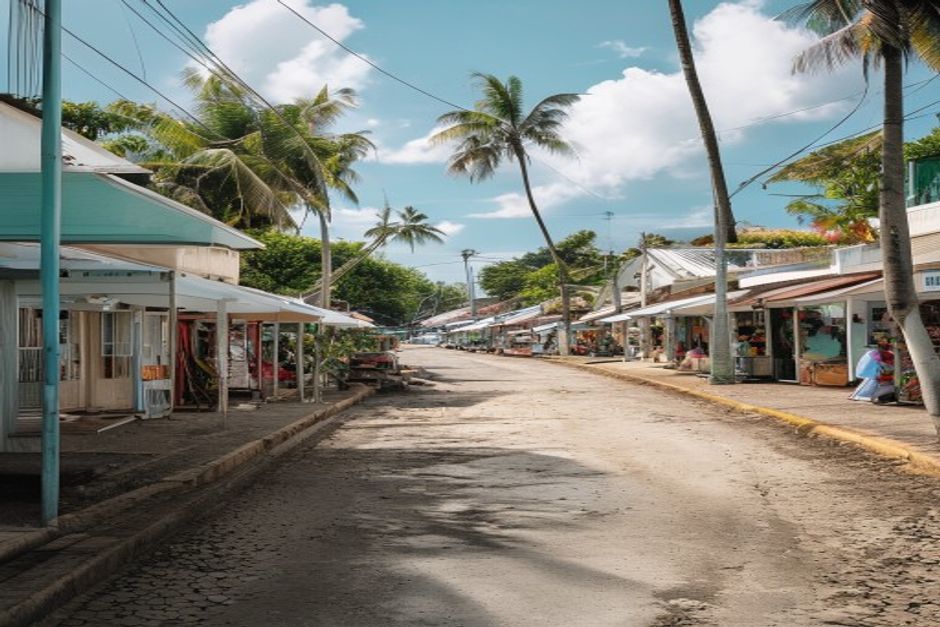
The secondary sector involves industries that create finished products ready for consumption. They take raw materials from primary activities and manufacture new goods for domestic sale or export. In Samoa, the main industrial products include food processing, building materials, and auto parts. These products play a crucial role in the country’s economy by providing employment opportunities and contributing to its overall economic growth.Manufactures in Samoa’s total exports are not significant, accounting for a low percentage in 2023. This indicates a reliance on other sectors for economic growth and trade balance.Tertiary sector of Samoa
International Trade of Samoa
Import Activities of Samoa
 Samoat’s import activities are crucial, accounting for 52.72% of its GDP in 2023, totaling $43,910,205.23.Samoa’s key import activities include refined petroleum, coated flat-rolled iron, fish, poultry, and ships. Its main import partners are China (25%), Singapore (16%), New Zealand (14%), South Korea (7%), and the United States (7%).
Exports Activities of Samoa
 In Samoa, exports totaled $102,172,238.28 in 2023, accounting for 12.27% of GDP. This indicates a medium level of importance, contributing significantly to the country’s economy.Samoa primarily exports coconut oil, integrated circuits, insulated wire, citrus, and power equipment. Its key export partners are India (23%), the US (19%), New Zealand (12%), Hungary (8%), and Poland (6%).
Samoa economy challenges in 2024
In 2024, Samoa faces economic challenges despite its thriving fishing and agriculture industries. The country struggles with increasing debt and environmental concerns, impacting its growth as an offshore financial hub. The recent Pacific Games aimed to boost tourism and infrastructure, but ongoing issues threaten progress.Sources
Last updated: August 2026



Leave a Reply