
Key Economic Insights: The economy of Tunisia generates an estimated GDP of $53.4 billion ($3,987 per capita) supporting a population of 12,356,117. Productive output is anchored by 63.8% services, 26.2% industry and manufacturing, and 10.1% agriculture and natural resource extraction. Key merchandise exports include Manufactured goods, mineral resources, and agricultural commodities, directed primarily toward Global and regional trade partners.
As of 2024, Tunisia’s GDP stood at approximately $53.4 billion. Its GDP per capita was about $3,987 (2024). World Bank data tracks these figures, which reflect a lower-middle-income economy.
Despite facing challenges, Tunisia continues to strive for economic growth and stability, focusing on sectors such as tourism, agriculture, and manufacturing to boost its economy and improve the standard of living for its citizens.
Tunisia Economic Structure & Sector Analysis
| Economic Dimension | Official Indicator (2024–2026) | Authoritative Source |
|---|---|---|
| GDP & Macro Output | Nominal GDP: $53.4 billion | Per Capita: $3,987 | World Bank WDI / IMF |
| Sector Breakdown | Services: 63.8% | Industry: 26.2% | Agriculture: 10.1% | World Bank National Accounts |
| Trade & Commodities | Top Exports: Manufactured goods, mineral resources, and agricultural commodities (Total: $1,208.2 million) | UN Comtrade / OEC |
| Demographics & Labor | Population: 12,356,117 | Distributed workforce across formal & primary sectors | ILO / UN Population Division |
| Strategic Trade Corridors | Leading Trade Partners: Global and regional trade partners | World Bank WITS / IMF DOTS |
- Primary activities: 10.1% of GDP.
- Secondary activities: 26.2% of GDP.
- Tertiary activities: 63.8% of GDP.
Primary Sector of Tunisia
With 62.44% of the country’s land dedicated to agriculture, Tunisia produces a diverse range of crops and animal products. The main agricultural products include milk, olives, tomatoes, wheat, barley, watermelons, chilies/peppers, potatoes, dates, and oranges.
Despite agriculture contributing 10.1% to the GDP, its significance lies in the variety and importance of these products to the sector. The country’s agricultural sector benefits from a wide array of crops and animal products, showcasing its vital role in sustaining the economy.
With a diverse geological landscape, Tunisia boasts abundant natural resources such as petroleum, phosphates, iron ore, lead, zinc, and salt. These resources play a significant role in the country’s economy, driving sectors like mining, energy, and manufacturing, contributing to its economic growth and development.Tunisia’s oil production of around 35,247 barrels per day places it at the 40th position in the world ranking. With oil reserves of 425 million barrels, the country holds 0.03% of the world’s oil reserves, further solidifying its economic activity in the oil sector.Tunisia’s gas production of 1.575 billion m³ in 2020 ranks it 61st globally, boosting economic activity.Secondary Sector of Tunisia
In Tunisia, the main industrial products include petroleum, phosphate, iron ore, textiles, footwear, agribusiness, and beverages. These products are manufactured for domestic consumption and exportation, contributing significantly to the country’s economy.Manufactures play a crucial role in Tunisia’s total exports, accounting for 78.1% in 2023. This highlights their significant contribution to the country’s economy and trade balance.Tertiary sector of Tunisia
Military Activities and Economic Sectors of Tunisia
In the primary sector, resources are extracted for military needs, like metals for weapons. The secondary sector involves manufacturing military equipment, such as vehicles and weapons. The tertiary sector includes services provided by the military, while the quaternary sector focuses on research and development for advanced technologies. Finally, the quinary sector deals with high-level military decision-making and strategy.
In Tunisia, the military expenditure for 2023 is $1,208.2 million, which is 2.47% of the country’s GDP. The active military force consists of 35,800 personnel, resulting in about 4.2 active military members for every 1,000 people in the population.
Biggest company in Tunisia
Which is the biggest company in Tunisia? By revenue, the largest is Poulina Group Holding, a diversified industrial and agri-food conglomerate listed on the Tunis Stock Exchange. As of 2024, it reported a turnover of about 3.91 billion Tunisian dinars (roughly $1.25 billion). Founded in 1967, the group spans poultry, food processing, steel, ceramics, and other manufacturing, making it a cornerstone of Tunisia’s secondary sector. Tunis Stock Exchange (BVMT).International Trade of Tunisia
Import Activities of Tunisia
 Tunisia’s high import activities, accounting for 61.38% of GDP, are crucial for meeting domestic demand and driving economic growth.Tunisia’s import activities are diverse, with top partners being Italy and France. Key imports include refined petroleum, natural gas, plastic products, wheat, and cars from countries like China, Germany, and Turkey.
Exports Activities of Tunisia
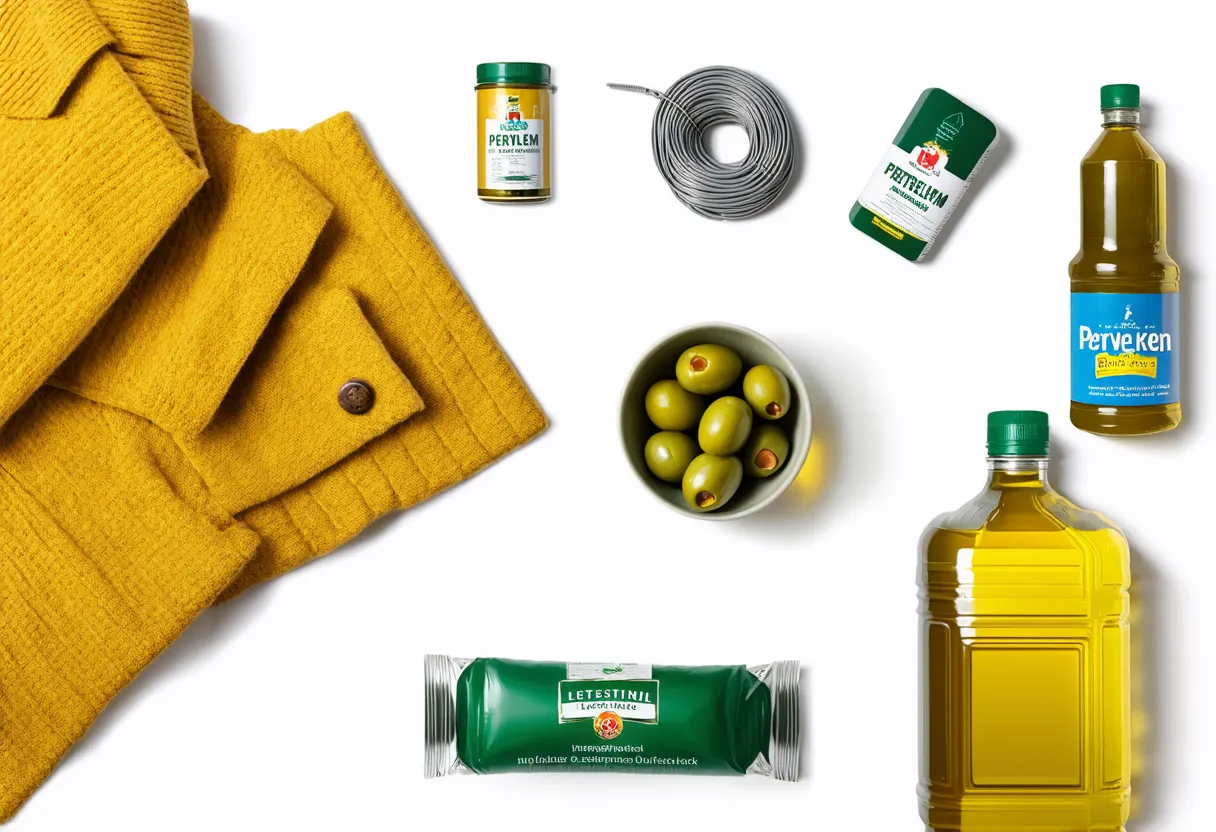 In 2023, Tunisia’s total exports reached $22.86 billion, accounting for 49.36% of its GDP. Export activities play a crucial role, with high importance in driving the country’s economy and fostering international trade relationships.Tunisia’s export activities are diverse, with key partners including France, Italy, Germany, Spain, and Libya. Major export commodities include garments, insulated wire, refined petroleum, crude petroleum, and pure olive oil.
Tunisia economy challenges in 2024
Tunisia, a lower middle-income North African economy, faces challenges in 2024. High unemployment, especially among youth and women, persists. The country is grappling with the impact of COVID-19, high public sector wages, and debt. Drafting reforms for foreign lenders and implementing protectionist austerity measures are crucial. Despite being a key EU trade partner, Tunisia struggles to stabilize its economy.Sources
- World Bank: Tunisia
- IMF: Tunisia
- CIA World Factbook: Tunisia
- UN Comtrade Plus: Trade Flow
- Tunis Stock Exchange (BVMT)
Last updated: August 2026



Leave a Reply