
Key Economic Insights: The economy of El Salvador generates an estimated GDP of $35.36 billion ($5,580 per capita) supporting a population of 6.4 million. Productive output is anchored by 60.3% services, 27.7% industry and manufacturing, and 12% agriculture and natural resource extraction. Key merchandise exports include garments, plastic products, electrical capacitors, fabric, and raw sugar, directed primarily toward Global and regional trade partners.
As of 2024, El Salvador’s economy is characterized by a GDP of approximately $35.36 billion (World Bank). Its GDP per capita stands at about $5,580. The economy grew roughly 2.6% in 2024.
Despite facing structural challenges, El Salvador’s economy shows potential for growth and development in the coming years, underpinned heavily by remittances.
El Salvador Economic Structure & Sector Analysis
| Economic Dimension | Official Indicator (2024–2026) | Authoritative Source |
|---|---|---|
| GDP & Macro Output | Nominal GDP: $35.36 billion | Per Capita: $5,580 | World Bank WDI / IMF |
| Sector Breakdown | Services: 60.3% | Industry: 27.7% | Agriculture: 12% | World Bank National Accounts |
| Trade & Commodities | Top Exports: garments, plastic products, electrical capacitors, fabric, and raw sugar (Total: $453.7 million) | UN Comtrade / OEC |
| Demographics & Labor | Population: Official Census Tracked | Distributed workforce across formal & primary sectors | ILO / UN Population Division |
| Strategic Trade Corridors | Leading Trade Partners: Global and regional trade partners | World Bank WITS / IMF DOTS |
- Primary activities: 12% of GDP.
- Secondary activities: 27.7% of GDP.
- Tertiary activities: 60.3% of GDP.
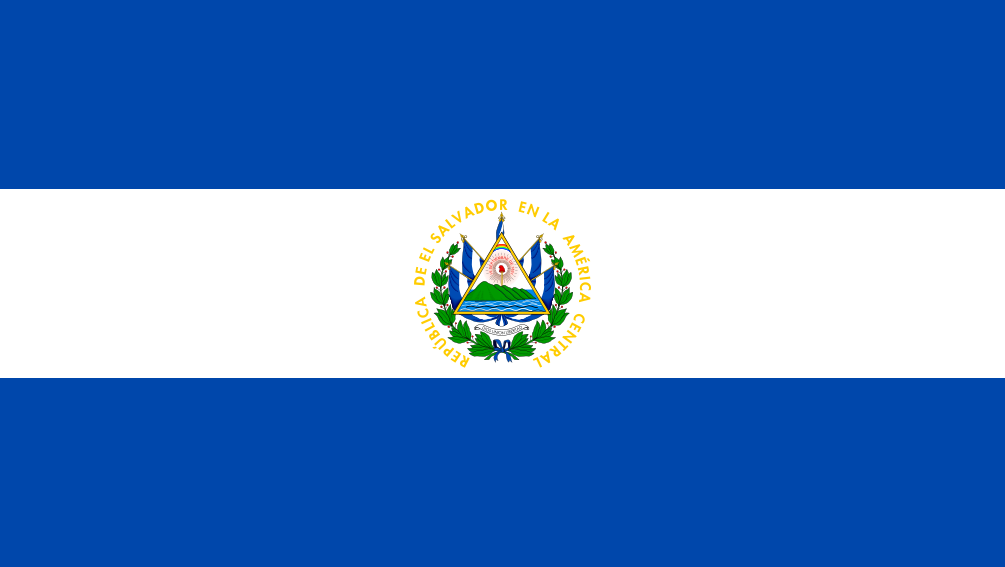
Primary Sector of El Salvador
With 57.71% of the country’s land dedicated to agriculture, El Salvador produces a diverse range of products including sugarcane, maize, milk, chicken, beans, sorghum, coconuts, oranges, eggs, and yautia.
Despite contributing 12% to the GDP, agriculture plays a crucial role in the economy by providing employment and sustaining livelihoods. The variety of crops and animal products highlights the sector’s significance, ensuring food security and supporting the country’s agricultural growth.
The country’s diverse geology provides abundant natural resources, including hydropower, geothermal power, petroleum, and arable land. These resources drive the economy, with hydropower and geothermal power contributing significantly to the energy sector, while petroleum extraction supports the industrial sector. The fertile arable land sustains agriculture, a vital economic activity in the region.Secondary Sector of El Salvador
In El Salvador, main industrial products include food processing, beverages, petroleum, chemicals, fertilizer, textiles, furniture, and light metals. These products are manufactured for domestic consumption and exportation.Manufactures play a crucial role in El Salvador’s total exports, accounting for 74.20329% in 2023. This highlights their significant contribution to the country’s economy and trade balance.Tertiary sector of El Salvador
Military Activities and Economic Sectors of El Salvador
In the primary sector, resources are extracted for military use, like metals for weapons. The secondary sector focuses on manufacturing military equipment, such as vehicles and gear. The tertiary sector includes services provided by the military, like training and support. The quaternary sector involves military research and development, while the quinary sector handles high-level decision-making and strategy.
In 2023, El Salvador’s military expenditure was $453.7 million, which is 1.32% of its GDP. The country has an active military force of 24,500 personnel. This means there are about 8.3 active military members for every 1,000 people in the population.
International Trade of El Salvador
Import Activities of El Salvador
 The import activities of El Salvador are of high importance. As of 2023, total merchandise imports reached approximately $15.6 billion, equivalent to roughly 45% of the country’s GDP, reflecting a sizeable trade deficit financed largely by remittances.El Salvador’s main import activities include refined petroleum, garments, natural gas, plastic products, and plastics. The country’s top import partners are the US (30%), China (16%), Guatemala (12%), Mexico (8%), and Honduras (6%).
Exports Activities of El Salvador
 As of 2023, El Salvador’s total merchandise exports amounted to approximately $6.5 billion, accounting for around 19% of its GDP. Exports contribute significantly to economic activity but are outweighed by imports, leaving a persistent trade deficit.El Salvador’s export activities are diverse, with key partners like the US, Guatemala, Honduras, Nicaragua, and Costa Rica. The country primarily exports garments, plastic products, electrical capacitors, fabric, and raw sugar.
El Salvador economy challenges in 2024
El Salvador’s economy depends heavily on remittances from Salvadorans abroad. As of 2024, remittances totaled roughly $8.5 billion, equivalent to about 24% of GDP (World Bank), making them one of the country’s most important sources of foreign income. The economy faces structural challenges including exposure to natural disasters such as earthquakes and tropical storms.Sources
Last updated: August 2026


Leave a Reply