
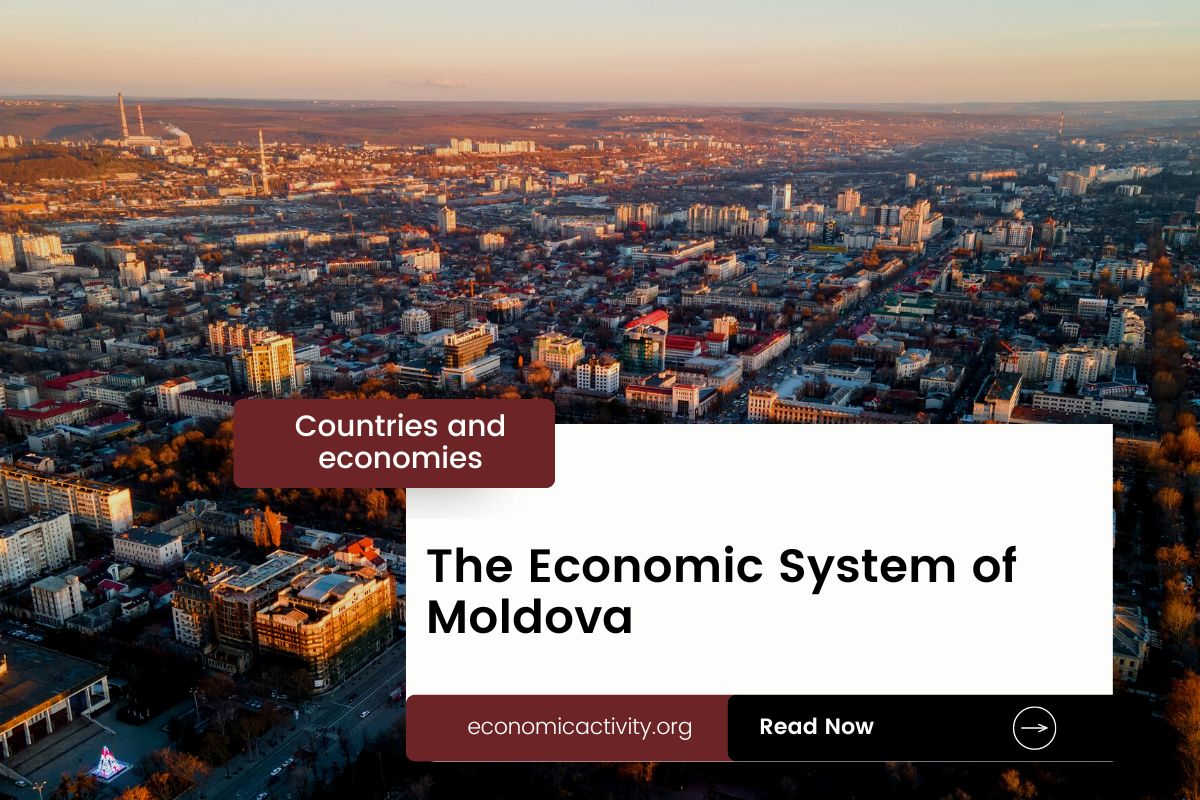
Moldova's economic system is a mixed economy combining a private sector with a public sector. What type of economic system does Moldova have? It leans heavily on agriculture, with wine a major export, alongside textiles and electronics. The 2026 Index of Economic Freedom scores it 58.3, ranking it 101st globally, Mostly Unfree, while Freedom House rates it 60/100, Partly Free.

What is the economic system of Moldova? The economy of Moldova is based on a mixed economy system. The country’s economy combines elements of a market economy and a planned economy.
Moldova’s economy is heavily reliant on agriculture, with wine production being a major export. Other industries include textiles, machinery, and electronics.
No country is purely capitalist or purely communist.
What do the freedom indexes tell about the economic system of Moldova?
For instance, according to the 2026 Index of Economic Freedom, which measures the ability of every human to control his own labor and property, Moldova is ranked 101st globally and 41st out of 44 countries in Europe, with a score of 58.3, indicating that the country has a mostly unfree economy.
In a similar way, the Freedom House Freedom in the World 2026 report evaluates the state of political rights and civil liberties globally. Moldova gets a score of 60/100, which qualifies it as Partly Free.
Moldova is considered to have a government that does not control what people do, and people can make their own economic decisions, but it is only considered an electoral democracy, lacking full liberal democratic protections.
The Link Between Public Sector Employment and the Economic System of Moldova
An indicator of the extent to which the State is involved in the economy is the number of public sector employees. In Moldova, according to ILOSTAT, the number of public sector employees as a percentage of the total workforce is 15.8% (2021). In the country’s mixed economy, the number of public sector employees as a percentage of the total workforce varies based on the specific policies and practices adopted by the State.
Some economic activities are left to the private sector while others are under government control. The bigger the public sector the closer the economy is to being a command economy.

What do the biggest companies in Moldova say about the country’s economic system?
The biggest company in Moldova should also be looked at, as well as whether it is a state-owned or private company. In this case, Moldovagaz SA is the largest company in Moldova by revenue, with sales of approximately €861 million as of 2024, according to HitHorizons data. Moldovagaz is a gas distribution company; its shareholders include Gazprom (50%), the Moldovan government (35%), and Transnistrian authorities (13%). The state-linked ownership structure of Moldova’s largest enterprise reflects the significant role of public and parastatal entities in the national economy.
Moldova’s private sector industries include agriculture, manufacturing, and services. Public industries include healthcare, education, and transportation.
The historical factors that have influenced the economic system of Moldova
Moldova’s mixed economy system is the result of a combination of market forces, state intervention, and foreign investment. The country has experienced a period of rapid economic growth since the fall of the Soviet Union, driven by increased foreign investment, privatization of state-owned enterprises, and improved access to global markets.
This has led to increased economic diversification and a more open economy. Additionally, the government has implemented a number of reforms to improve the business environment and attract foreign investment.
Sources
- List of countries by the public sector size
- ILOSTAT — Moldova
- 2026 Index of Economic Freedom — Moldova
- Freedom in the World 2026 — Moldova
- HitHorizons — Top companies in Moldova by revenue
- Moldovagaz SA
Last updated: August 2026


Leave a Reply