
Key Economic Insights: The economy of Cambodia generates an estimated GDP of $51.27 billion ($2,872 per capita) supporting a population of 17,847,982. Productive output is anchored by 35.0% services, 43.1% industry and manufacturing, and 16.1% agriculture and natural resource extraction.
As of 2025, Cambodia’s GDP was approximately $51.27 billion (current US$), according to the World Bank. The GDP per capita stood at about $2,872 (current US$) in 2025.
Real GDP grew by about 6.0% in 2024, supported by garment and footwear exports, agriculture, and a continued recovery in tourism. Despite facing challenges, Cambodia’s economy shows continued potential for growth and development in the coming years.
Cambodia Economic Structure & Sector Analysis
| Economic Dimension | Figure | Authoritative Source |
|---|---|---|
| GDP & Macro Output | Nominal GDP: $51.27 billion | Per Capita: $2,872 | World Bank WDI / IMF |
| Sector Breakdown | Services: 35.0% | Industry: 43.1% | Agriculture: 16.1% | World Bank National Accounts |
| Demographics & Labor | Population: 17,847,982 | ILO / UN Population Division |
- Primary activities: 16.1% of GDP (2025).
- Secondary activities: 43.1% of GDP (2025).
- Tertiary activities: 35.0% of GDP (2025).
Primary Sector of Cambodia
In Cambodia, the primary sector, particularly agriculture, plays a significant role in the economy. With 34.55% of the country’s land dedicated to agriculture, the sector produces a variety of crops and animal products. The main agricultural products include cassava, rice, maize, sugarcane, vegetables, oil palm fruit, rubber, bananas, jute, and pork.
While agriculture contributes about 16.1% to GDP (as of 2025), its importance extends beyond economic metrics. The sector provides employment, food security, and sustains rural livelihoods. The diverse range of crops and animal products highlights the resilience and potential of Cambodia’s agricultural sector.
With a diverse geological landscape, the primary sector thrives in Cambodia with abundant natural resources like oil and gas, timber, gemstones, iron ore, manganese, phosphates, and hydropower potential. These resources significantly contribute to the economy through exports and employment opportunities, utilizing the vast expanse of arable land for agriculture.Secondary Sector of Cambodia
In Cambodia, the main industrial products include garments, construction materials, rice milling, wood products, rubber, cement, gemstones, and textiles. These products are manufactured for domestic consumption and export, contributing significantly to the country’s economy.Manufactures play a crucial role in Cambodia’s total exports, accounting for 90.8% in 2023. This highlights the significant economic contribution and dependency on the manufacturing sector for the country’s export revenue.Tertiary sector of Cambodia
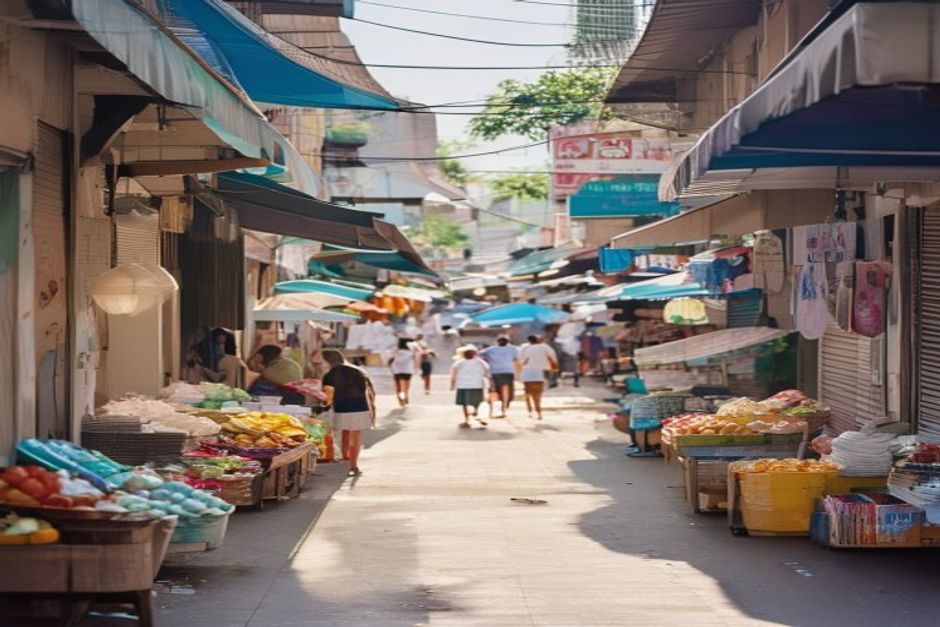
Military Activities and Economic Sectors of Cambodia
In Cambodia, the military engages in the primary sector by extracting resources for defense. The secondary sector is involved in manufacturing military equipment. The tertiary sector provides services, while the quaternary sector focuses on research and development for military needs. Finally, the quinary sector involves high-level decision-making and strategy in the military.
As of 2024, Cambodia’s military expenditure was about $720 million, roughly 1.5% of its GDP. The active military force consists of around 124,300 personnel, or about 7 active military members for every 1,000 people in the country.
International Trade of Cambodia
Import Activities of Cambodia
 Cambodia’s import activities are substantial. As of 2024, total imports of goods reached about $28.54 billion (General Department of Customs and Excise), signifying the country’s reliance on foreign goods for economic growth.Cambodia’s key import activities include gold, refined petroleum, fabric, plastic products, and vehicle parts/accessories. The country’s major import partners are China (30%), Thailand (19%), Singapore (18%), Vietnam (13%), and Switzerland (3%).
Exports Activities of Cambodia
 Export activities in Cambodia are of high importance. As of 2024, total goods exports reached about $26.19 billion (up 15.7% year-on-year, per the General Department of Customs and Excise), highlighting the significant role they play in driving the country’s economy.Cambodia’s export activities primarily focus on garments, trunks, footwear, cassava, and shoes. The country’s top export partners are the US, Vietnam, Germany, Japan, and Canada, with the US being the largest at about 38% (2024).
Cambodia economy challenges in 2024
Cambodia faces challenges in 2024 despite economic growth. The country struggles with poverty in rural areas, impacted by the loss of EU market access and COVID-19. The manufacturing and construction sectors are vital, but disparities persist.Sources
Last updated: October 2026


Leave a Reply