
Key Economic Insights: The economy of Equatorial Guinea generates an estimated GDP of $12.77 billion ($6,745 per capita) supporting a population of 1,892,516. Productive output is anchored by 42.9% services, 54.6% industry and manufacturing, and 2.5% agriculture and natural resource extraction. Key merchandise exports include Manufactured goods, mineral resources, and agricultural commodities, directed primarily toward Zambia (21%), Spain (15%), China (15%), India (10%), and Italy (6%).
Equatorial Guinea, with a population of 1,892,516 (2024, World Bank), is ranked among the world’s smaller nations, comparable to Latvia. Located in Central Africa, it covers 28,050 square kilometers, ranking 135th globally, slightly smaller than Albania.
As of 2024, Equatorial Guinea’s economy reflects a GDP of approximately $12.77 billion, reflecting the long decline of its oil-dependent economy from its mid-2000s peak. The country’s GDP per capita stands at about $6,745 (2024, World Bank), still among the higher figures in Sub-Saharan Africa despite the contraction.
Despite its significant natural resource wealth, Equatorial Guinea faces challenges in diversifying its economy and addressing income inequality to further improve its economic standing on the global stage.
Equatorial Guinea Economic Structure & Sector Analysis
| Economic Dimension | Official Indicator (2024–2026) | Authoritative Source |
|---|---|---|
| GDP & Macro Output | Nominal GDP: $12.77 billion | Per Capita: $6,745 | World Bank WDI / IMF |
| Sector Breakdown | Services: 42.9% | Industry: 54.6% | Agriculture: 2.5% | World Bank National Accounts |
| Trade & Commodities | Top Exports: Manufactured goods, mineral resources, and agricultural commodities (Total: Official UN Comtrade) | UN Comtrade / OEC |
| Demographics & Labor | Population: 1,892,516 | Distributed workforce across formal & primary sectors | ILO / UN Population Division |
| Strategic Trade Corridors | Leading Trade Partners: Zambia (21%), Spain (15%), China (15%), India (10%), and Italy (6%) | World Bank WITS / IMF DOTS |
- Primary activities: 2.5% of GDP.
- Secondary activities: 54.6% of GDP.
- Tertiary activities: 42.9% of GDP.
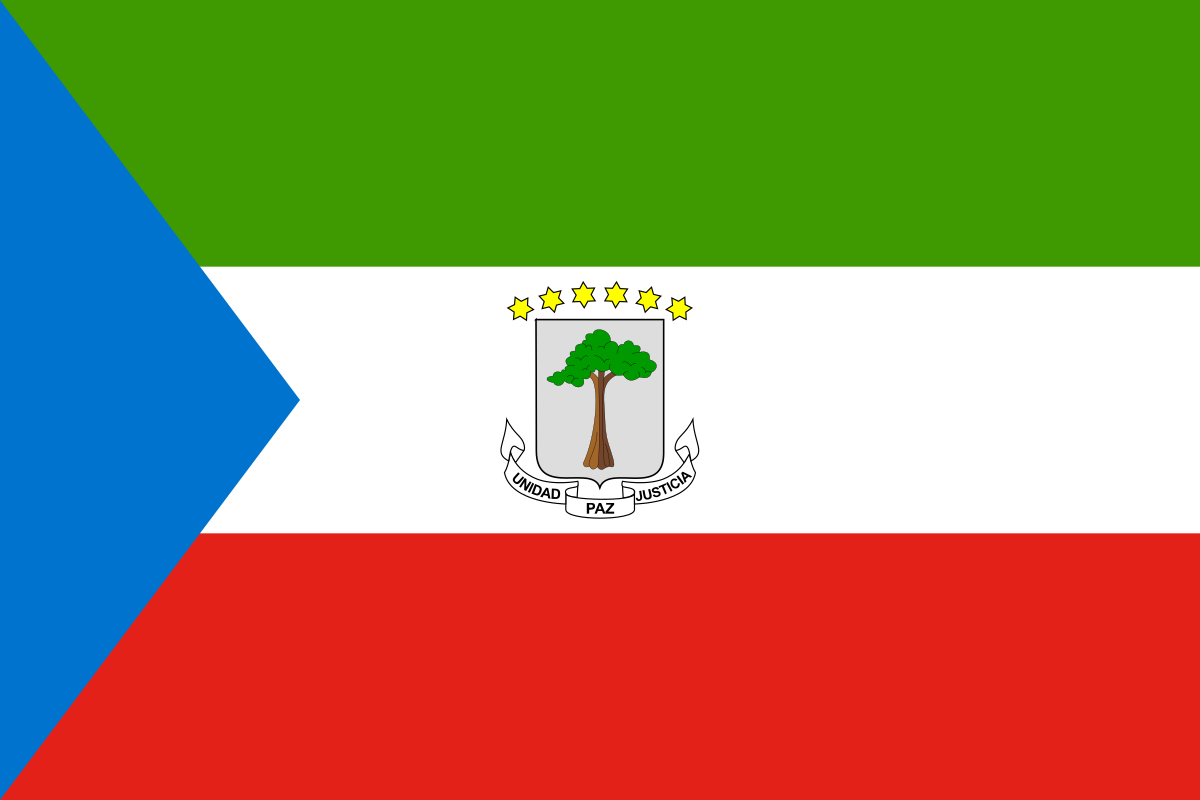
Primary Sector of Equatorial Guinea
With 3.74% of the country’s land designated for agriculture, Equatorial Guinea produces a variety of crops including sweet potatoes, cassava, plantains, oil palm fruit, root vegetables, bananas, coconuts, coffee, cocoa beans, and chicken.
Despite contributing only 2.5% to the GDP, agriculture is vital for food security and employment. The diverse range of agricultural products highlights the sector’s importance, providing sustenance and income for many in the country.
With a diverse geological landscape, Equatorial Guinea boasts abundant natural resources such as petroleum, natural gas, timber, gold, bauxite, diamonds, tantalum, sand, gravel, and clay. These resources play a crucial role in driving the country’s economy, particularly through the extraction and export of oil and gas, which form the backbone of its revenue generation. Additionally, the forestry and mining sectors contribute significantly to the country’s economic growth and employment opportunities.
Equatorial Guinea’s gas production of 6.2 billion m³ in 2020 positions it as the 47th largest natural gas producer globally.
Secondary Sector of Equatorial Guinea
The secondary sector involves industries that create finished products from raw materials. Equatorial Guinea’s main industrial products include petroleum, natural gas, sawmilling, and construction materials.
In 2023, Equatorial Guinea’s total exports are dominated by non-manufactured products, making the contribution of manufactures to the country’s exports relatively insignificant.
Tertiary sector of Equatorial Guinea
The tertiary sector, also known as the service sector, encompasses intangible goods like advice, expertise, and attention. In Equatorial Guinea, key tertiary activities include healthcare, education, banking, communication, tourism, and transportation. These services play a crucial role in enhancing productivity and meeting the needs of the population.
Specifically, Equatorial Guinea’s economy heavily relies on oil exports, with tourism playing a minor role. The country’s annual tourist arrivals are relatively low compared to its population, indicating a less significant contribution from the tourism sector to its overall economic development.
Another example of tertiary economic activity is the mobile cellular sector, which boasts around 893,000 subscriptions, facilitating communication and supporting technological growth through enhanced connectivity and innovation.
Military Activities and Economic Sectors of Equatorial Guinea
In the primary sector, resources are extracted for military use, like oil and minerals. The secondary sector involves manufacturing military equipment, such as vehicles and weapons. The tertiary sector includes the services provided by the military, while the quaternary sector focuses on research and development. Lastly, the quinary sector deals with high-level military decisions and strategies.
In Equatorial Guinea, the military expenditure in 2023 is 162 million US dollars, which is about 1.1% of the country’s GDP. The active military force has 2,400 personnel, resulting in 3 active military members for every 1,000 people in the country.
International Trade of Equatorial Guinea
Import Activities of Equatorial Guinea

Equatorial Guinea’s high import activities, constituting 35.72% of GDP, are crucial for meeting domestic needs and driving economic growth.
Equatorial Guinea’s main import partners are Zambia, China, Spain, Nigeria, and the US. The country primarily imports ships, refined copper, iron alloys, raw copper, and poultry to meet its domestic needs and support its economy.
Exports Activities of Equatorial Guinea
Equatorial Guinea’s export activities play a crucial role, accounting for over 51% of its GDP. This high percentage signifies the significant economic importance of exports in driving the country’s growth and development.
Equatorial Guinea’s export activities are primarily focused on crude petroleum, natural gas, fertilizers, packaged medicine, and cars. Its top export partners include Zambia (21%), Spain (15%), China (15%), India (10%), and Italy (6%).
Equatorial Guinea economy challenges in 2024
Equatorial Guinea, a growing CEMAC economy and new OPEC member, faces challenges in 2024. Despite large oil and gas reserves, the country struggles with economic diversification, poverty, and the aftermath of the CEMAC crisis. Recovery efforts are hindered by persistent poverty and the impact of COVID-19.
Sources
- World Bank Data: Equatorial Guinea
- IMF: Equatorial Guinea
- CIA World Factbook: Equatorial Guinea
- OEC: Equatorial Guinea Trade
- UN Comtrade Plus: Trade Flow
Last updated: August 2026


Leave a Reply