
Key Economic Insights: The economy of Albania generates an estimated GDP of $27.18 billion ($10,012 per capita) supporting a population of 2,402,113. Productive output is anchored by 47.4% services, 21.4% industry and manufacturing, and 18.6% agriculture and natural resource extraction. Key merchandise exports include garments, footwear, iron alloys, electricity, and crude petroleum, directed primarily toward Italy (41%), Greece (10%), Spain (7%), Germany (5%), and China (4%).
As of 2023, Albania had a resident population of 2,402,113 according to the national census, reflecting a significant decline driven by emigration. Located in Southeast Europe, it covers a total area of 28,750 square kilometers, ranking 134th globally, with Solomon Islands following closely behind.
As of 2024, Albania’s GDP stood at approximately 27.18 billion USD, according to World Bank data. The GDP per capita for Albania in 2024 was 10,012 USD, reflecting steady growth as the economy expanded by around 4% that year.
Despite its ranking, Albania’s economy shows potential for growth and development in the coming years.
Albania Economic Structure & Sector Analysis
| Economic Dimension | Figure | Authoritative Source |
|---|---|---|
| GDP & Macro Output | Nominal GDP: $27.18 billion | Per Capita: $10,012 | World Bank WDI / IMF |
| Sector Breakdown | Services: 47.4% | Industry: 21.4% | Agriculture: 18.6% | World Bank National Accounts |
| Trade & Commodities | Top Exports: garments, footwear, iron alloys, electricity, and crude petroleum | UN Comtrade / OEC |
| Demographics & Labor | Population: 2,402,113 | ILO / UN Population Division |
| Strategic Trade Corridors | Leading Trade Partners: Italy (41%), Greece (10%), Spain (7%), Germany (5%), and China (4%) | World Bank WITS / IMF DOTS |
- Primary activities (agriculture): around 18.6% of GDP.
- Secondary activities (industry): around 21.4% of GDP.
- Tertiary activities (services): around 47.4% of GDP.

Primary Sector of Albania
With 41.47% of the country’s land dedicated to agriculture, Albania produces a diverse range of products including milk, maize, tomatoes, potatoes, watermelons, wheat, grapes, olives, cucumbers/gherkins, and onions.
Despite contributing around 18.6% to the GDP (latest available World Bank figure), agriculture plays a crucial role in the economy by providing employment and sustaining rural livelihoods. The variety of crops and animal products highlight the sector’s significance, showcasing the country’s agricultural potential and resilience.
With a diverse geological landscape, Albania boasts abundant natural resources like petroleum, natural gas, coal, bauxite, and more. These resources play a vital role in the economy, especially in sectors such as energy, mining, and agriculture, contributing to the country’s overall development and growth.
Albania’s oil production of around 16,093 barrels per day places it at the 51st position in the world ranking. With oil reserves of 168,332,000 barrels, the country holds 0.01% of the world’s oil reserves, highlighting its significance in the global oil economic activity.
Albania’s gas production of 35 million m³ in 2020 ranks it 87th globally, supporting energy sector growth.
Secondary Sector of Albania
In Albania, key industrial products include food, footwear, apparel, lumber, oil, cement, chemicals, basic metals, and hydropower. These goods are manufactured for both domestic use and export, contributing significantly to the country’s economy.
In 2023, Albania’s manufactures exports accounted for 34.51% of total exports, indicating their significance. However, their overall contribution to the economy may not be as crucial as other sectors due to diversification efforts.
Tertiary sector of Albania
The tertiary sector in Albania encompasses services that focus on knowledge and time to enhance productivity and meet needs. It includes intangible goods like advice and expertise, catering to both consumers and businesses. Key tertiary activities in Albania are restaurants, healthcare, education, banking, communication, tourism, and transportation.
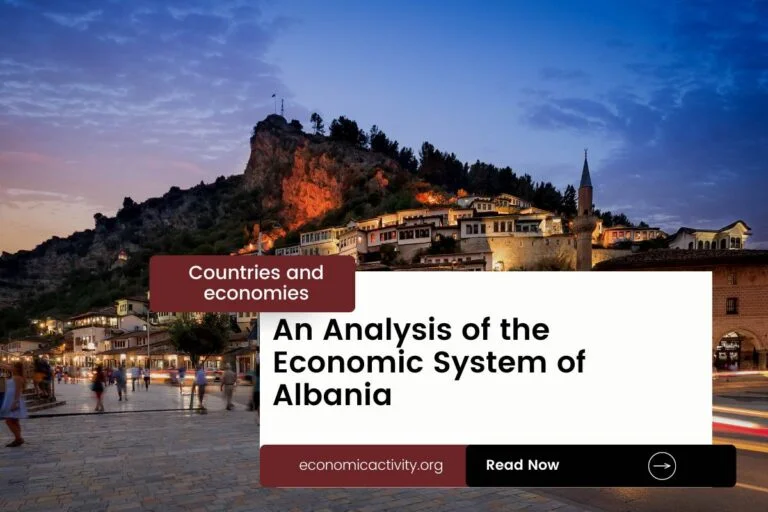
Among these, Albania’s economy heavily relies on tourism, contributing significantly to its GDP. As of 2024, Albania welcomed a record 11.7 million foreign visitors. Popular destinations like the historic cities of Berat and Gjirokastër, along with the picturesque Albanian Riviera, attract visitors worldwide. Tourism plays a crucial role in driving Albania’s economic growth and development.
Another example of tertiary economic activity is the mobile cellular sector, which boasts approximately 2.8 million subscriptions, equating to about 98 per 100 inhabitants. This extensive connectivity fosters technological growth, enabling innovation and enhancing digital services across various industries.
Military Activities and Economic Sectors of Albania
The primary sector helps by providing resources needed for military use, like metals and fuels. The secondary sector is important too, as it manufactures military equipment. The tertiary sector includes services like training and logistics, while the quaternary sector focuses on research and development. Lastly, the quinary sector involves high-level decision-making and strategy for military operations.
As of 2024, Albania’s military expenditure was about $535 million, which is roughly 2.0% of its GDP, reaching the NATO spending target. The active military force consists of around 8,500 personnel, resulting in about 3.5 active military members for every 1,000 people in the country.
International Trade of Albania
Import Activities of Albania

Albania’s high import activities, accounting for 47.75% of GDP, play a crucial role in meeting domestic demand and driving economic growth.
Albania’s main import activities include refined petroleum, garments, electricity, cars, and raw iron bars. Its top import partners are Italy (25%), Turkey (14%), Greece (12%), China (10%), and Germany (5%).
Exports Activities of Albania

Albania’s total exports in 2023 amounted to $7.07 billion, making up 37.4% of its GDP. This high percentage highlights the significant importance of export activities in driving the country’s economic growth and stability.
Albania primarily exports garments, footwear, iron alloys, electricity, and crude petroleum. Its main export partners are Italy (41%), Greece (10%), Spain (7%), Germany (5%), and China (4%).
Albania economy challenges in 2024
Albania, an upper-middle-income Balkan economy, faces challenges in weak governance, corruption, and climate adaptation. Despite growth from tourism and services, fiscal consolidation is needed to address public debt. The country also grapples with vulnerability to energy shocks and emigration of workers. As an EU accession candidate, Albania strives for progress amidst these obstacles in 2024.
Sources
- World Bank Data: Albania
- IMF Data Mapper
- INSTAT – Institute of Statistics of Albania
- Trading Economics: Albania
- Heritage Foundation: All Country Scores
- CIA World Factbook: Agricultural Products
- Our World in Data: Human Development Index
- UN Comtrade Plus: Trade Flow
- SIPRI Military Expenditure Database
Last updated: August 2026


Leave a Reply