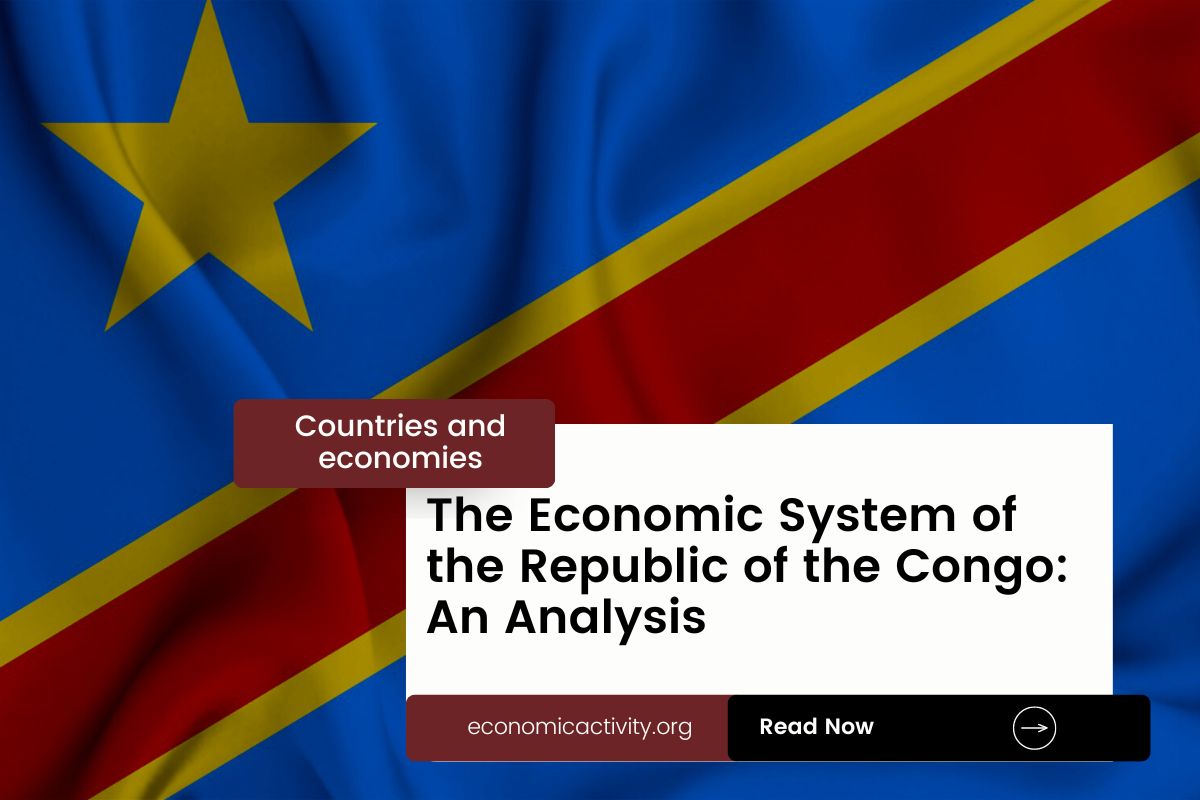
The Republic of the Congo's economic system is a mixed economy combining market and state roles, centered on oil production with mining, forestry, and agriculture alongside it. What type of economic system does the Republic of the Congo have? The 2026 Index of Economic Freedom scores it 48.6 as repressed, while Freedom House rates it 17 of 100.

What is the economic system of the Republic of the Congo? The economy of the Republic of the Congo is based on a mixed economy. The country’s economic system combines elements of a market economy and a planned economy.
The country’s economy centers on oil production, which contributes a significant portion of its GDP. Other sectors include mining (potash, diamonds), forestry, and agriculture (cassava, sugar). Infrastructure development and diversification are ongoing challenges.
No country is purely capitalist or purely communist.
What do the freedom indexes tell about the economic system of the Republic of the Congo?
For instance, according to the 2026 Index of Economic Freedom, which measures the ability of every human to control his own labor and property, the Republic of the Congo scored 48.6 and is ranked among the lowest globally, indicating that the country has a repressed economy.
In a similar way, the 2026 Freedom House index evaluates the state of political rights and civil liberties globally.
The Republic of the Congo gets a score of 17/100, which qualifies it as Not Free. The Republic of the Congo is a country where the government controls what people do for political reasons, and people have limited freedom to choose (what, how much, and how to produce, whether to buy or not, selling price, etc.)
What do the biggest companies in the Republic of the Congo say about the country’s economic system?
The biggest company in the Republic of the Congo should also be looked at, as well as whether it is a state-owned or private company. In this case, SNPC (Société Nationale des Pétroles du Congo) is the country’s largest enterprise by revenue, functioning as the state-owned national oil company responsible for managing Congo’s interests across the full oil and gas value chain — upstream production, refining, and distribution. Founded in 1998, SNPC is a wholly state-owned company, reflecting the government’s central role in the country’s dominant hydrocarbon sector.
The historical factors that have influenced the economic system of the Republic of the Congo
The Republic of the Congo has experienced a mixed economy system due to a combination of factors, including the introduction of market-based reforms, the growth of the private sector, and the liberalization of trade and investment.
These reforms have allowed the country to benefit from increased foreign investment, improved access to global markets, and increased economic growth.
Sources
- List of countries by the public sector size
- ILOSTAT – Republic of the Congo
- 2026 Index of Economic Freedom – Republic of the Congo
- Freedom in the World 2026 – Republic of the Congo
- SNPC – Groupe SNPC
Last updated: August 2026


Leave a Reply