
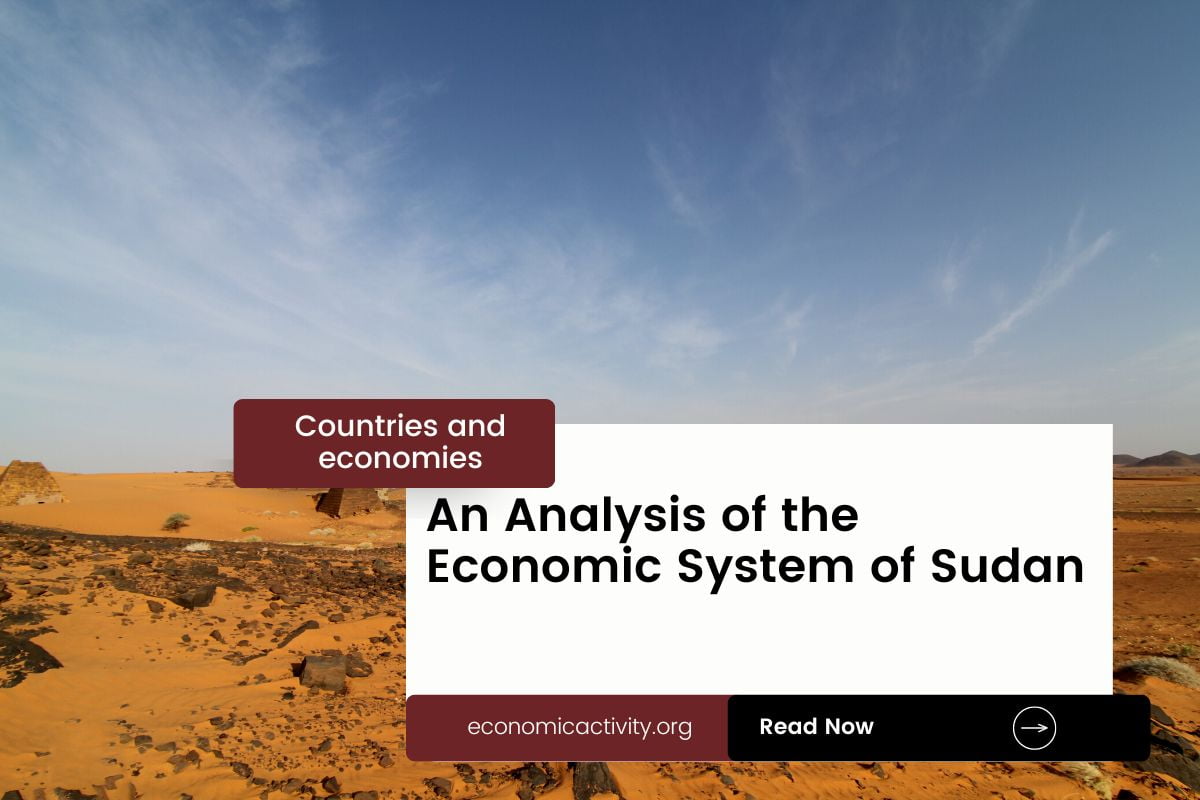
Sudan's economic system is a mixed economy that blends market and planned features, rooted in agriculture like cotton, sorghum, and livestock, plus gold and petroleum resources. What type of economic system does Sudan have? The 2026 Index of Economic Freedom scores it 32.5, among the lowest globally and rated Repressed amid the civil conflict that began in April 2023.
What is the economic system of Sudan? The economy of Sudan is based on a mixed economy. The country’s economic system combines elements of a market economy and a planned economy.
Sudan’s economy is primarily based on agriculture, with key sectors including cotton, sorghum, and livestock. The country has significant mineral resources such as gold and petroleum, which contribute to its export earnings. Services and industry sectors, including textiles and food processing, also play a role in Sudan’s economy.
No country is purely capitalist or purely communist.

What do the freedom indexes tell about the economic system of Sudan?
For instance, according to the 2026 Index of Economic Freedom, which measures the ability of every human to control his own labor and property, Sudan scores 32.5 out of 100, ranking among the lowest countries globally and in Sub-Saharan Africa with a Repressed designation. This score has deteriorated significantly in recent years, reflecting the severe economic disruption caused by the ongoing civil conflict that began in April 2023.
In a similar way, the 2026 Freedom House index evaluates the state of political rights and civil liberties globally. Sudan scores 1/100 (down from 10/100 in 2022), which qualifies it as Not Free — one of the lowest scores globally, reflecting the catastrophic impact of the civil war on political rights and civil liberties.
Sudan is a country where the government controls what people do for political reasons, and people have limited freedom to choose (what, how much, and how to produce, whether to buy or not, selling price, etc.)
What do the biggest companies in Sudan say about the country’s economic system?
The biggest company in Sudan should also be looked at, as well as whether it is a state-owned or private company. In this case, Zain Sudan is a leading telecom provider in Sudan, offering mobile, internet, and financial services. The company is owned by Zain Group, a Kuwait-based private telecommunications company. The biggest company in the country is privately owned.
The historical factors that have influenced the economic system of Sudan
The current mixed economy system of Sudan is the result of the country’s colonial history, its reliance on oil exports, and its reliance on foreign aid.
The colonial period saw the introduction of a market-based economy, while the oil industry provided a major source of income for the country. Additionally, foreign aid has helped to prop up the economy, allowing for increased investment in infrastructure and social services and its development as a market economy.
Sources
- List of countries by the public sector size
- ILOSTAT
- 2026 Index of Economic Freedom — Sudan
- Freedom in the World 2026 — Sudan
- Zain Sudan
Last updated: August 2026


Leave a Reply