
Key Economic Insights: The economy of South Africa generates an estimated GDP of $401.14 billion ($6,267 per capita) supporting a population of 60.4 million. Productive output is anchored by 67.5% services, 29.7% industry and manufacturing, and 2.8% agriculture and natural resource extraction. Key merchandise exports include Manufactured goods, mineral resources, and agricultural commodities, directed primarily toward Global and regional trade partners.
As of 2024, South Africa’s GDP is approximately $401.14 billion (World Bank), one of the largest economies in Africa. Its GDP per capita stands at about $6,267 (2024).
Despite facing challenges such as high unemployment and energy constraints, South Africa’s economy remains significant on the global stage.
South Africa Economic Structure & Sector Analysis
| Economic Dimension | Official Indicator (2024–2026) | Authoritative Source |
|---|---|---|
| GDP & Macro Output | Nominal GDP: $401.14 billion | Per Capita: $6,267 | World Bank WDI / IMF |
| Sector Breakdown | Services: 67.5% | Industry: 29.7% | Agriculture: 2.8% | World Bank National Accounts |
| Trade & Commodities | Top Exports: Manufactured goods, mineral resources, and agricultural commodities (Total: $107.12 billion) | UN Comtrade / OEC |
| Demographics & Labor | Population: Official Census Tracked | Distributed workforce across formal & primary sectors | ILO / UN Population Division |
| Strategic Trade Corridors | Leading Trade Partners: Global and regional trade partners | World Bank WITS / IMF DOTS |
- Primary activities: 2.8% of GDP.
- Secondary activities: 29.7% of GDP.
- Tertiary activities: 67.5% of GDP.
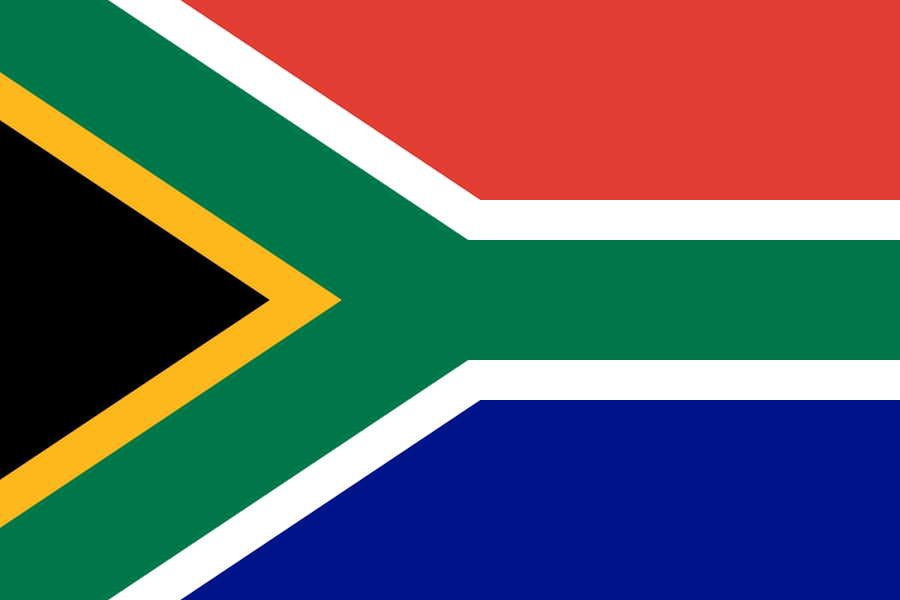
Primary Sector of South Africa
With 79.42% of the land dedicated to agriculture, the country produces a variety of crops and animal products, including sugarcane, maize, milk, potatoes, wheat, grapes, chicken, oranges, apples, and soybeans.
Despite agriculture contributing only 2.8% to the GDP, it plays a crucial role in the economy. The top ten agricultural products, based on tonnage, showcase the sector’s significance and highlight the country’s agricultural diversity.
With a diverse geological landscape, the primary sector thrives in South Africa due to abundant natural resources. Gold, chromium, coal, and platinum drive the economy, along with iron ore, manganese, and diamonds. The country’s leading chromite ore production in 2022 highlights its significance in the global market.South Africa’s oil production of around 950 barrels per day ranks it 70th globally. With 15 million barrels in reserves, it holds 0% of the world’s total.South Africa’s gas production, ranking 65th globally, contributes to its diverse economic activity.Secondary Sector of South Africa
In South Africa, major industrial products include platinum, gold, chromium, automobile assembly, metalworking, machinery, textiles, iron and steel, chemicals, fertilizer, foodstuffs, and commercial ship repair.Manufactures in South Africa’s total exports accounted for 40.49% in 2023, indicating a significant but not dominant role in the country’s export sector. Other industries also play crucial roles in diversifying the economy.Tertiary sector of South Africa

Military Activities and Economic Sectors of South Africa
In South Africa, the military uses resources from the primary sector for equipment and supplies. The secondary sector manufactures military gear, while the tertiary sector provides services like logistics and training. The quaternary sector focuses on research and development, creating new technologies. Finally, the quinary sector involves high-level decision-making and strategy for military operations.
As of 2024, South Africa’s military expenditure was about 2,836 million US dollars, which is roughly 0.7% of the country’s GDP (SIPRI), making it the largest defence spender in sub-Saharan Africa. The active military force has roughly 65,000 personnel.
International Trade of South Africa
Import Activities of South Africa
 South Africa’s import activities are crucial, accounting for 31.52% of its GDP, with a total of $107.12 billion imports in 2023.South Africa’s major import activities include refined petroleum, cars, and broadcasting equipment. Its top partners are China, Germany, India, the US, and Saudi Arabia, with China accounting for 21% of imports.
Exports Activities of South Africa
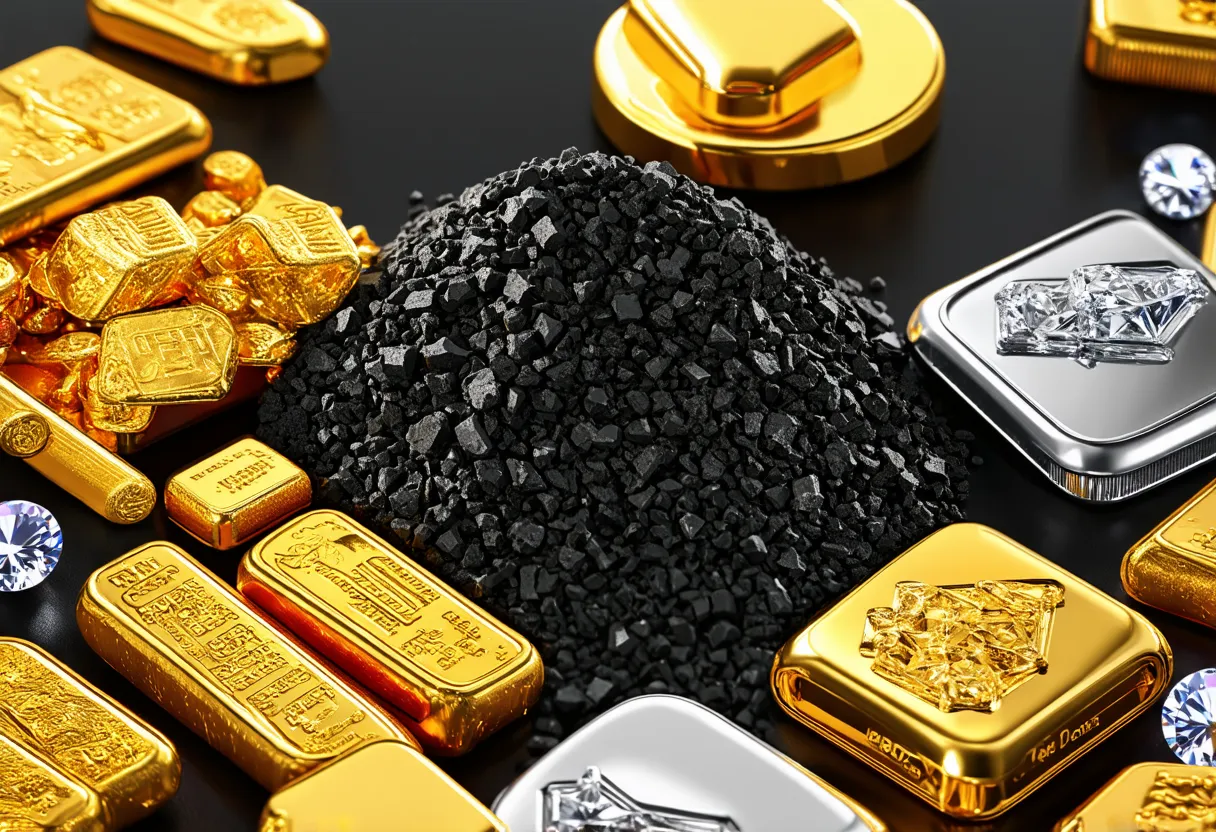 South Africa’s total exports in 2023 amounted to $110.6 billion, constituting 33.54% of its GDP. This signifies a medium level of importance, reflecting a significant contribution to the country’s economic growth and stability.South Africa’s export activities are diverse, with major partners like China, the US, Germany, India, and Japan. Key commodities include gold, platinum, coal, cars, and diamonds.
South Africa economy challenges in 2024
In 2024, South Africa faces challenges with its economy hit hard by COVID-19, poor utilities management, and high income inequality. Despite being a key rare earth goods exporter and hosting Africa’s largest stock exchange, rising unemployment, especially among the youth, and ongoing land rights changes pose significant obstacles for the country.Sources
- World Bank Data: South Africa
- IMF Data Mapper
- Heritage Foundation: All Country Scores
- CIA World Factbook: South Africa
- Our World in Data: Human Development Index
- UN Comtrade Plus: Trade Flow
- SIPRI Military Expenditure Database
Last updated: August 2026



Leave a Reply