
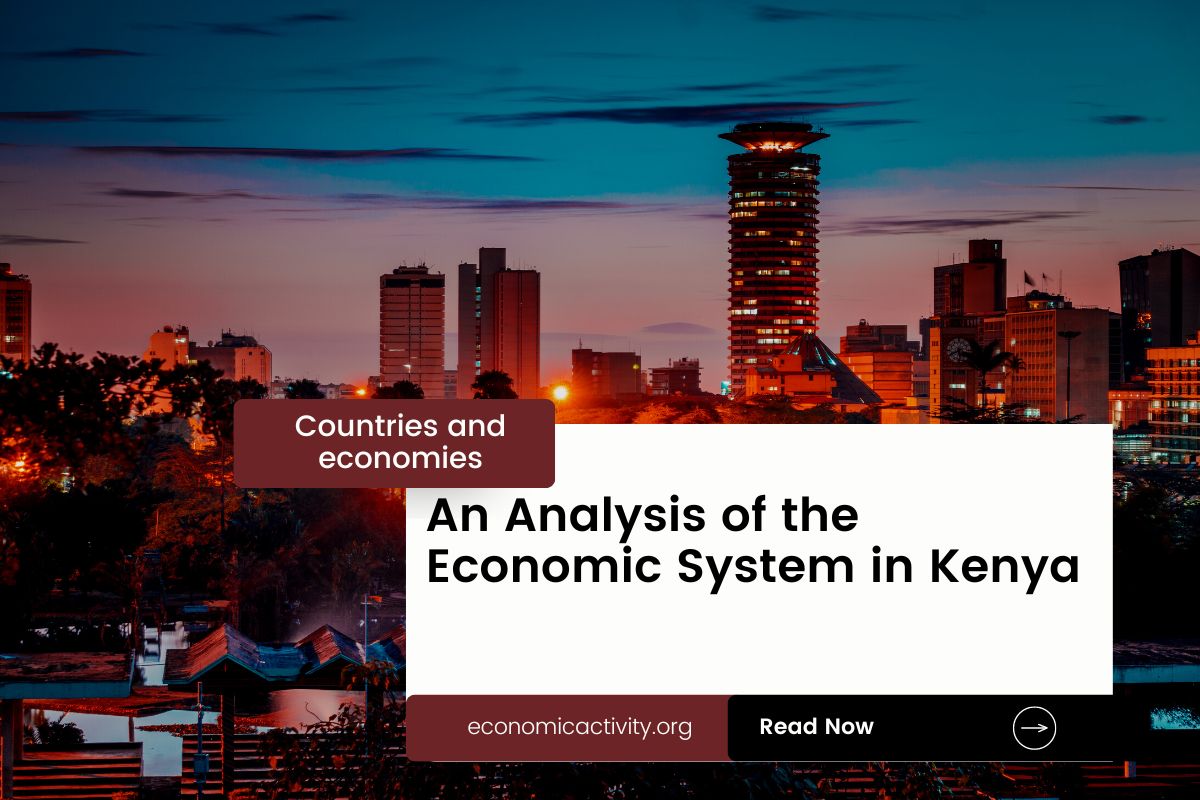
What type of economic system does Kenya have? Kenya's economic system is a mixed economy pairing private enterprise with a state-run public sector. It is diverse, spanning agriculture, manufacturing, and services, and acts as a trade hub for East Africa. Ranked 114th on the 2026 Index of Economic Freedom and mostly unfree, it scores 49/100 on Freedom House, Partly Free.
What is the economic system of Kenya? The economy of Kenya is based on a mixed economy. The country’s economic system combines elements of a market economy and a planned economy.
Kenya’s economy is diverse, with agriculture, manufacturing, and services sectors contributing to its growth. It is also a hub for trade and investment in East Africa.
No country is purely capitalist or purely communist.

What do the freedom indexes tell about the economic system of Kenya?
For instance, according to the 2026 Index of Economic Freedom, which measures the ability of every human to control his own labor and property, Kenya is ranked 114th globally, indicating that the country has a mostly unfree economy.
In a similar way, the Freedom House Freedom in the World 2026 index evaluates the state of political rights and civil liberties globally.
Kenya gets a score of 49/100, which qualifies it as Partly Free. Kenya is considered to have a government that does not control what people do, and people can make their own economic decisions, but it is only considered an electoral democracy, lacking full liberal democratic protections.
What do the biggest companies in Kenya say about the country’s economic system?
The biggest company in Kenya should also be looked at, as well as whether it is a state-owned or private company. In this case, Safaricom is a leading mobile network operator in Kenya, providing mobile money, voice, data, and digital services. Safaricom reported group service revenue of KES 335.4 billion (As of FY2024). The company is owned by the Government of Kenya (35%), Vodacom (35%), Vodafone (5%), and free float (25%), which makes Safaricom a mixed company.
Kenya’s private sector industries include agriculture, tourism, manufacturing, and financial services. Public industries include healthcare, education, transportation, and energy.
The historical factors that have influenced the economic system of Kenya
The mixed economy system of Kenya in the last century was caused by a combination of factors, including the influence of colonialism, the growth of the private sector, and the implementation of economic policies that encouraged foreign investment.
These factors created a system that is characterized by both public and private ownership of resources, and a market-based approach to economic decision-making.
Sources
- List of countries by the public sector size
- ILOSTAT Employment Statistics
- 2026 Index of Economic Freedom — Kenya
- Freedom in the World 2026 — Kenya
- Safaricom
- Safaricom Annual Report 2024
Last updated: June 20, 2026


Leave a Reply