
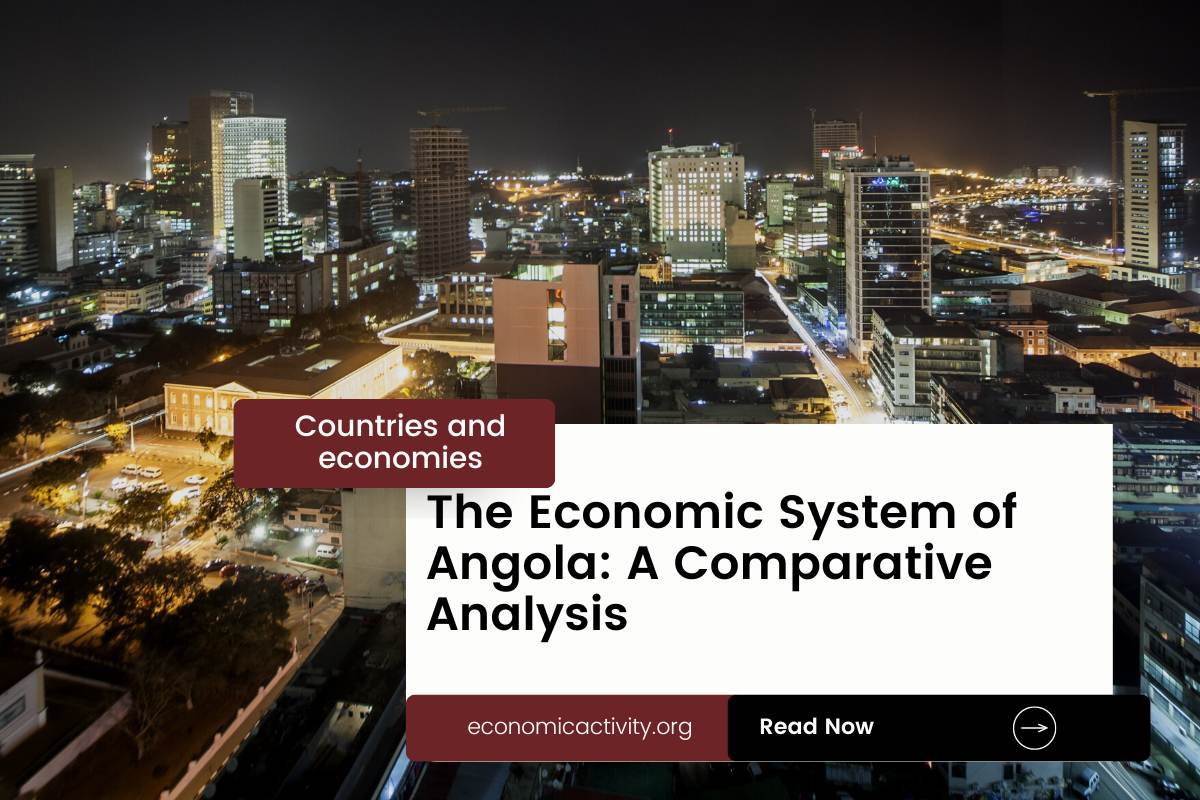
Angola's economic system is a mixed economy where the state controls much of production and distribution alongside a private sector. What type of economic system does Angola have? The 2026 Index of Economic Freedom scores it 55.0 out of 100, a mostly unfree economy, while the Freedom in the World 2026 index rates it 28/100 as Not Free.
What is the economic system of Angola? The economy of Angola is based on a mixed economy. The country’s economic system combines elements of a market economy and a planned economy.
No country is purely capitalist or purely communist.
What do the freedom indexes tell about the economic system of Angola?
For instance, according to the 2026 Index of Economic Freedom, which measures the ability of every human to control his own labor and property, Angola scores 55.0 out of 100, indicating that the country has a mostly unfree economy.
In a similar way, the Freedom in the World 2026 index evaluates the state of political rights and civil liberties globally. Angola gets a score of 28/100 (As of 2026), which qualifies it as Not Free. Angola is a country where the government controls what people do for political reasons, and people have limited freedom to choose (what, how much and how to produce, whether to buy or not, selling price, etc.)
The Link Between Public Sector Employment and the Economic System of Angola
An indicator of the extent to which the State is involved in the economy is the number of public sector employees. In Angola, according to ILOSTAT, the number of public sector employees as a percentage of the total workforce is 14.6% (2014). In the country’s mixed economy, the number of public sector employees as a percentage of the total workforce varies based on the specific policies and practices adopted by the State. Some economic activities are left to the private sector while others are under government control. The bigger the public sector the closer is the economy to being a command economy.
What does the biggest company in Angola say about the country’s economic system
The biggest company in Angola should also be looked at, as well as whether it is a state-owned or private company. In this case, Sonangol is Angola’s largest company by revenue. The state-owned national oil company generated turnover of approximately $10.5 billion in FY2024 (As of 2024), and is fully owned by the Angolan government. Sonangol dominates Angola’s oil-dependent economy and illustrates the extent to which the state shapes economic activity in the country.
The historical factors that have influenced the economic system of Angola
The current mixed economy system of Angola is the result of a combination of factors, including the legacy of colonialism, the civil war, and the country’s economic policies. Colonialism left Angola with a legacy of inequality and a lack of infrastructure, while the civil war caused a disruption in economic activity and a decrease in foreign investment. The government has implemented policies to promote economic growth, such as privatization and liberalization, but these have not been enough to create a strong and stable economy.
Sources
- List of countries by the public sector size
- ILOSTAT Country Profiles
- 2026 Index of Economic Freedom — Angola
- Freedom in the World 2026 — Angola
- Sonangol Group
- Sonangol 2024 turnover $10.5B (AMAN/Lusa)
Last updated: August 2026


Leave a Reply